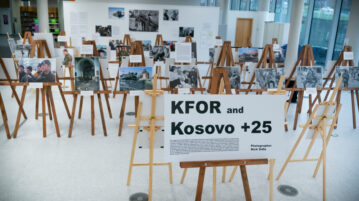


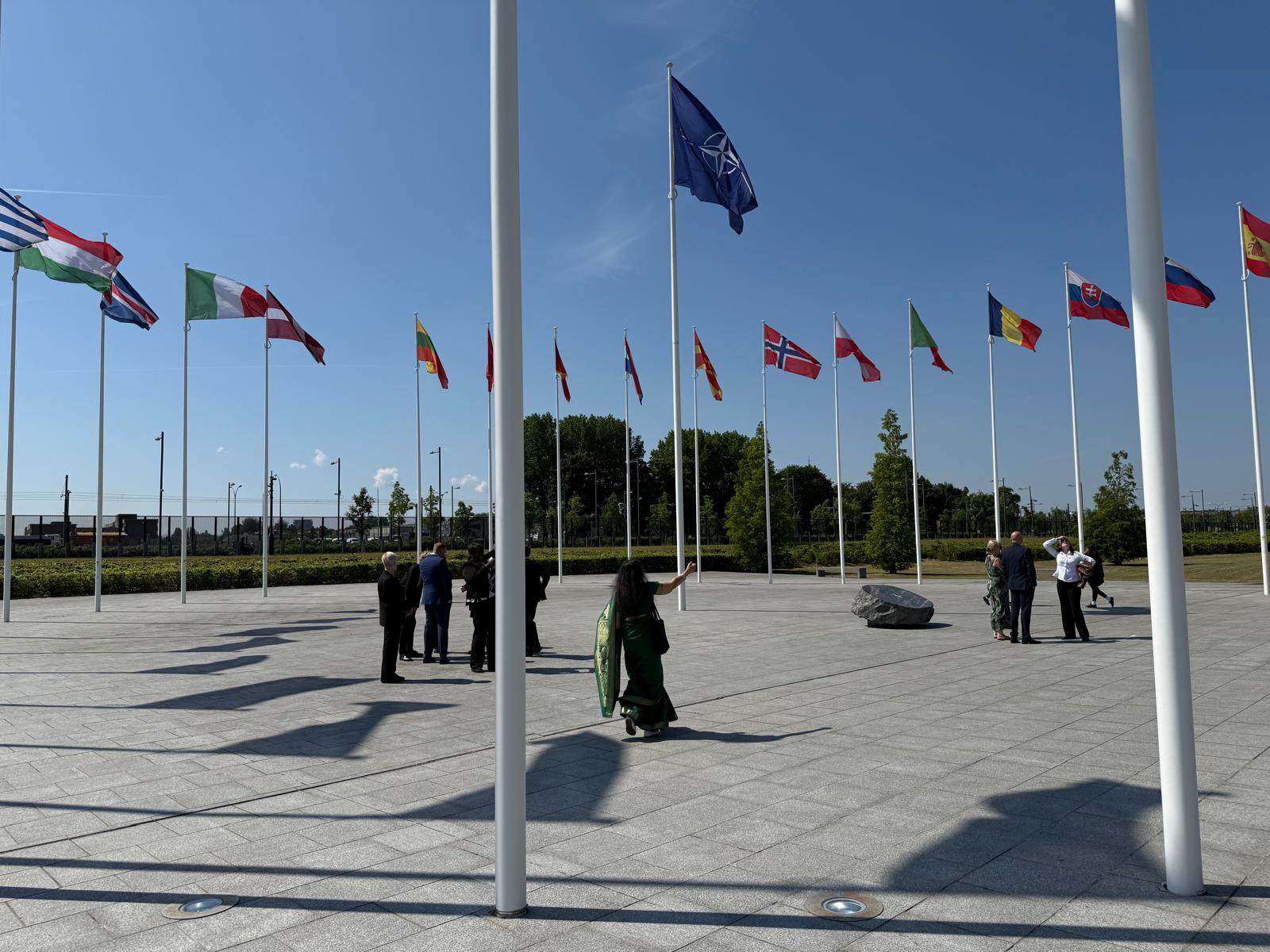

On Tuesday, May 20th 2025, a distinguished audience of NATO Permanent Representatives and their Deputies, invited by the UK Delegation gathered at NATO HQ in Brussels for a presentation of images drawn from the Heartstone ‘KFOR and Kosovo +25’ exhibition.
Alongside the NATO guests were special guests who had travelled from the UK to be at the event.
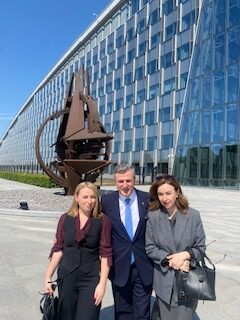
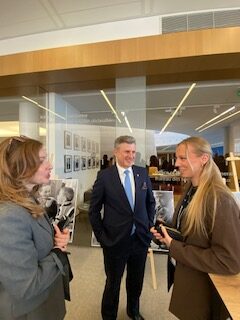
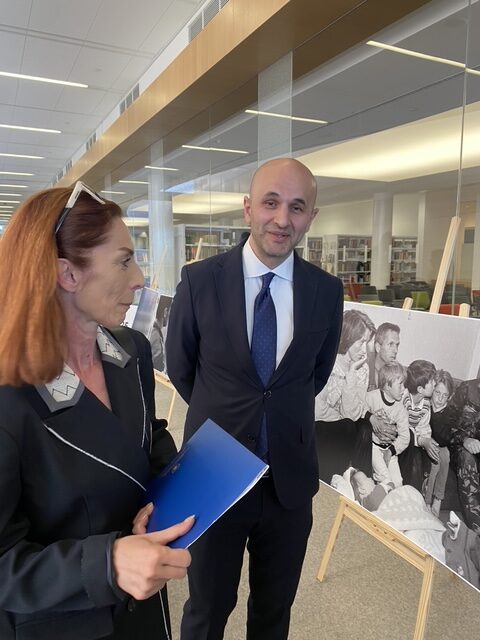
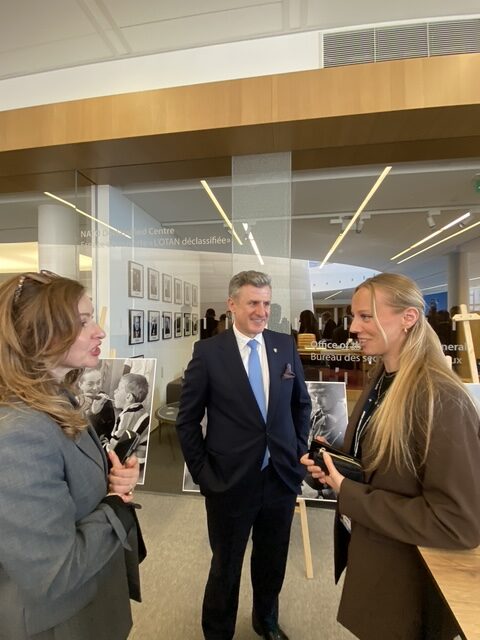
One of these guests was HE Mr Ilir Kapiti, Kosovo Ambassador to the UK, with his wife, Eranda Kapiti. pictured at right with Rina Bujupi (first left) from the Heartstone team and Kosovan resident in Manchester, the location of the next major exhibition event in the UK in 2025-26. For this event, Ambassador Kapiti had been nominated to represent Prime Minister of Kosovo, Mr Albin Kurti and HE Mr Agron Bajrami, Kosovo Ambassador to Belgium. In photo on the left, Eranda Kapiti is pictured in conversation with Blerta Mehmeti, of Kosovo Albanian background currently doing an internship at NATO HQ and supporting the development of ‘KFOR and Kosovo +25’ as a volunteer.
The Background to the Photodocumentary
World events are happening all the time but it is not long before the world moves on. Histories are written and often fought over the largest themes and significances but all too often the stories of those who worked the hardest, achieved the most and deserve so much credit are overlooked and forgotten. To bring those stories to life and earn the attention they deserve demands storytelling of the highest order. In the 20th century and now into the 21st, that storytelling became visual and whilst there has been an increasing and global coverage, only a few practitioners have achieved more than the record and extended their documentary practice to become an art form that serves to go beyond the communication of events into the sharing of feelings, experiences and lives. This is what ‘KFOR and Kosovo+25’ is about, when the exhibition was first presented in 2001 and now, 25 years later in a new form restored, extended and updated for the present day.
In 1999, KFOR, the NATO led international peacekeeping force, entered Kosovo following resolution 1244 by the United Nations Security Council. 2024 marked the 25th anniversary of that deployment.
Documentary photographer Nick Sidle, was attached to KFOR in the operation’s early stages. He was embedded with several units over the course of 1 year and produced a unique record of the work of the peacekeepers. Troops from nine different countries are featured, including nineteen individual regiments or units from the United Kingdom and the United States, the two largest contributors to KFOR. The photostory captured not just the work of the soldiers, and how they helped to bring stability and security, it also highlighted the world of Kosovo at the time from a human angle. Audiences can empathise with and understand a world in which intimidation and threat had been taken to new levels and why there was a need for the peacekeeping intervention to safeguard lives and homes, and help rebuild ordinary life in what were extraordinary circumstances. The ‘KFOR and Kosovo’ exhibition in 2001 was presented in the UK and worldwide, at the Brussels European Parliament and NATO HQ. It was also converted into a format for use by schools and colleges to generate discussion on the issues raised.
25 years later, this story is not over. It is a documentary of a period of history that must not be forgotten, but it also holds many lessons for our time in a world where many are living with conflict/hostility, circumstances which are impacting on all of us. KFOR is still active in Kosovo today. The photostory, and the discussion it leads to, takes its audiences, through a visual medium, into a world where it is possible to empathise with those of different backgrounds and understand the commonality of human experience. It illustrates why intolerance needs to be addressed at its earliest stages, particularly in times of difficulty, and the need for peacekeeping forces. It also helps to better understand the experience of refugees displaced peoples. It is about the everyday reality of living with emotional trauma and fear but it is also a positive story – it is about human resilience and hope in extraordinary circumstances and the importance of people and nations working co-operatively together to achieve positive outcomes.
With the support of Lord George Robertson and partners he has helped to bring, this exhibition has been restored and reworked from film originals, a process that began in September 2023 marked by an event at the Scottish Parliament. At the NATO HQ event, a selection of images from the photodocumentary were presented following a programme of exhibitions across the UK and in Pristina in 2024. We hope this will be the start of further stagings of the exhibition in Europe given the relevance of this story at this time.
The Speakers
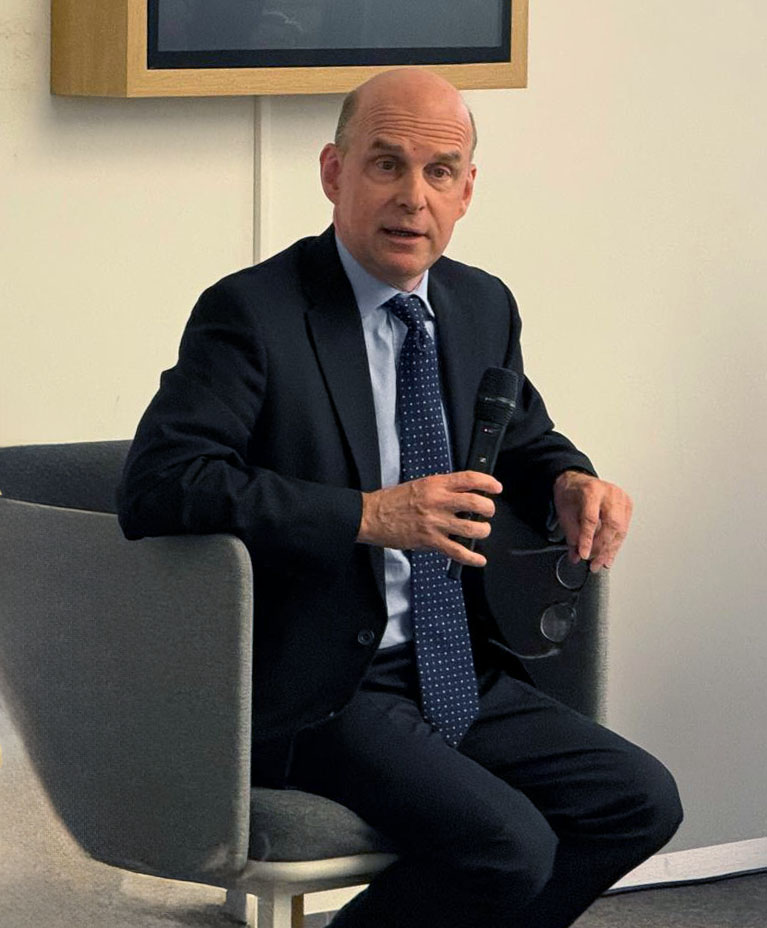
The event had been initiated and sponsored by the UK NATO Delegation following the event which had taken place for ‘KFOR and Kosovo +25’ at the House of Commons in October 2024. Permanent Representative Ambassador Angus Lapsley (right) welcomed all guests and chaired the event.
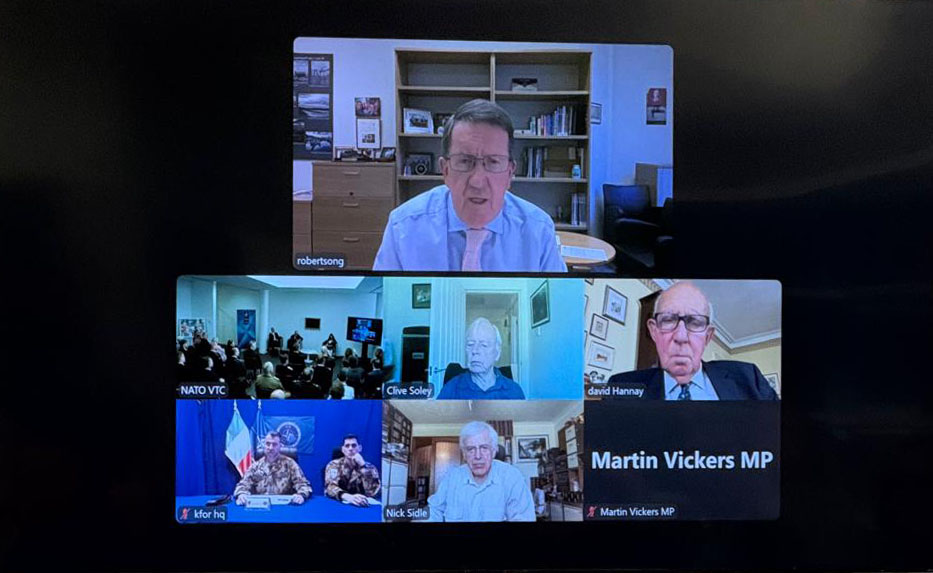
Lord Robertson (at top of screen) opened the event online with other distinguished guests present, Lord Hannay, Lord Soley, Col Michelangelo Genchi – Chief of Cabinet to Maj Gen Barduani current Commander of KFOR in Kosova, Nick Sidle, the photographer behind ‘KFOR and Kosovo +25’ and Mr Martin Vickers, MP and Chair of the All Party Parliamentary Group on Kosovo and Albania.
Rt Hon Lord Robertson of Port Ellen KT GCMG Hon FRSE PC said:
‘This exhibition highlights a remarkable period in recent European history. The armed forces who liberated Kosovo and the people they liberated are now remembered in this historic photodocumentary of real human interest. It is an illustrated lesson for our time’
Lord Soley, Leader, Westminster Foundation Group to Kosovo 1999 (post conflict political reconstruction) said:
‘The international community coming together to bring peace to a war torn society. International intervention is never easy and above all it depends on the courage, commitment and training of our armed forces, something this exhibition captures so well alongside the human story of what happened after the conflict. We should be grateful to them and to all those who made a success of this venture. ’
The statement below is from Major General Barduani, 29th Commander of Kosovo Force, who expressed his appreciation for the initiative which highlights the continued attention to the KFOR mission by NATO and the International Community. To this day, KFOR can be considered NATO’s longest standing and most successful mission. He said:
”The Commander of Kosovo Force, Major General Enrico BARDUANI believes that the “KFOR and Kosovo + 25 Exhibition” represents a unique opportunity, first and foremost, to remember and honour those KFOR soldiers who, over the past 25 years, suffered from injuries or even sacrificed their lives in the fulfilment of their duty to ensure security and stability in Kosovo. Secondly, this event powerfully illustrates – through images captured by the lens – the resilience of people, whether soldiers or ordinary citizens, who with unwavering hope, strive each day to overcome challenges and shape a future grounded in peace and social development. The Kosovo Force, currently composed of 33 Troops Contributing Nations – 28 NATO members and 5 partners – continues, as it did 25 years ago, to carry out its mission with dedication and impartiality to help make Kosovo, and the entire Balkan Region, a stable area projected toward sustainable social and economic development, for the benefit of all communities, regardless of ethnicity or religious belief.”
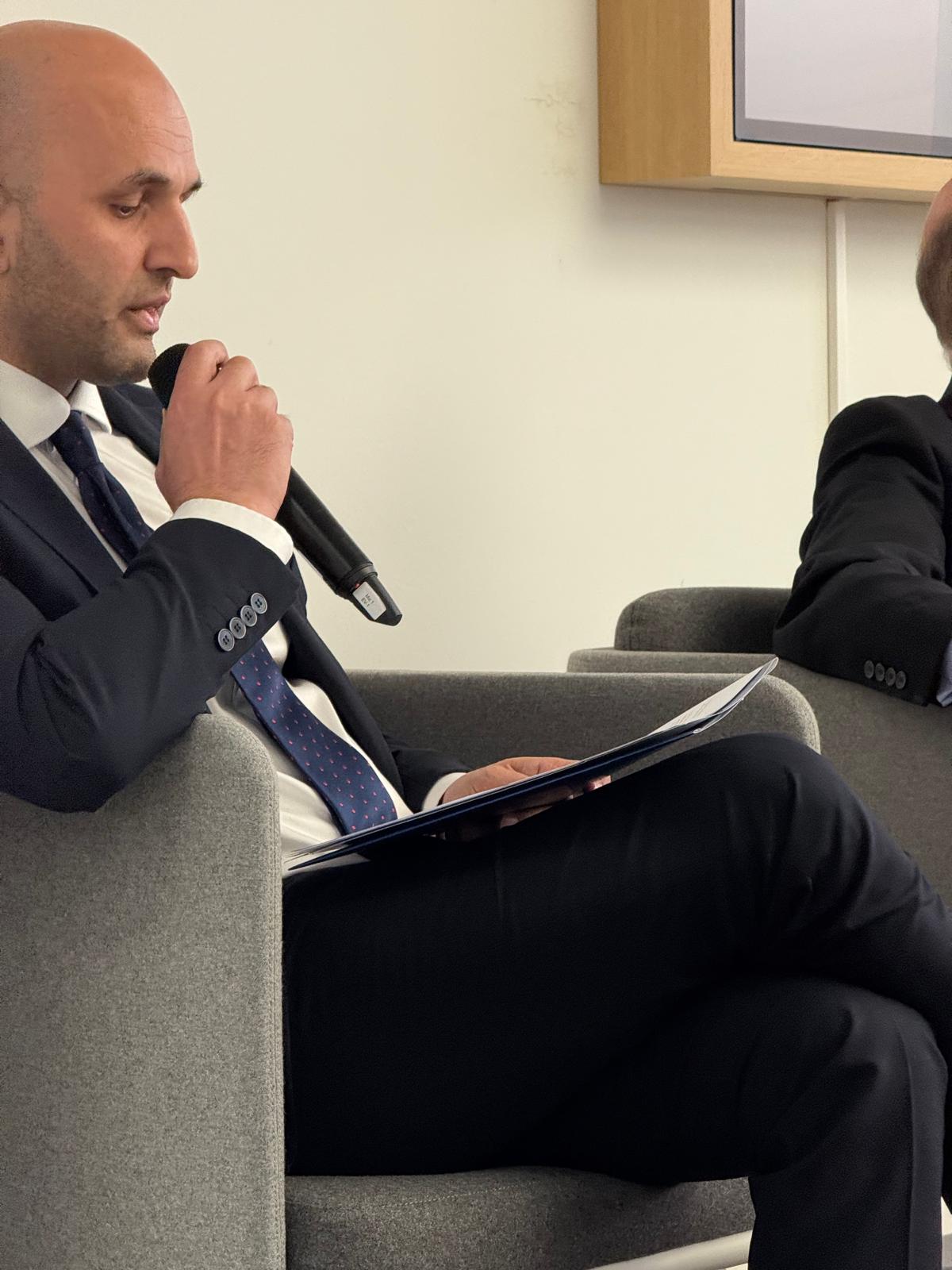
Mr Bislim Bislimi, General Secretary of the Ministry of Culture, Youth and Sports for Kosovo, spoke of the next stage of this project in Kosovo – the expanded exhibition of upto 250 images to take shape in the new Museum of Kosovo, the tracking down of civilians in the images to capture their stories 25 years later and the inclusion of the memorial and acknowledgement of KFOR to be placed in the new exhibition.
As to the question of where this goes next, he announced the start of Story Circles in Kosovo in Mitrovica, Podujeva and Pristina and the start of the Global Story Circle. Kosovo is one of the first four countries bringing this to life, the other three being the UK, Alabama in the USA and Queensland Australia.
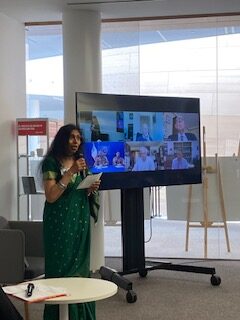
Sitakumari, Director of Heartstone, who had helped set up the initial access for the photodocumentary 25 years ago, spoke of the background and relevance of the story at the 25th anniversary for all communities and all countries. She also spoke of the next stage of this project – the hope that the exhibition can now be extended to new locations across Europe together with participation in the Global Story Circle as is happening in Kosovo.
The Photographer
UK Permanent Representative to NATO Angus Lapsley asked Nick Sidle, who had also joined online, what his hopes were now for the photodocumentary he had produced. Nick spoke of the need for the story to be seen by a wider audience, drawing more people into the human story he was able to capture 25 years ago at a unique point in history and continue to inspire people of all communities, cultures and backgrounds who come into contact with it.
The Images
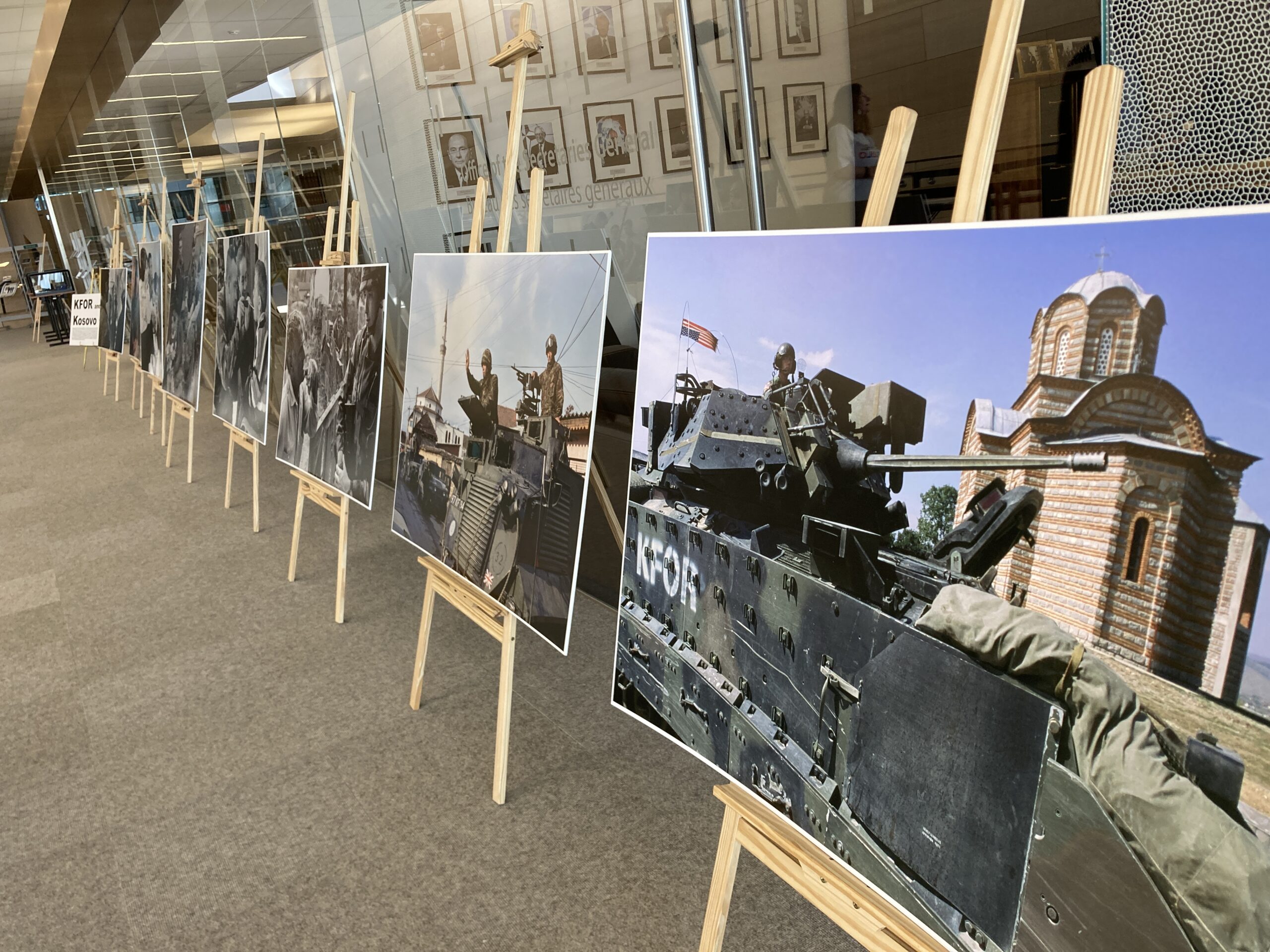
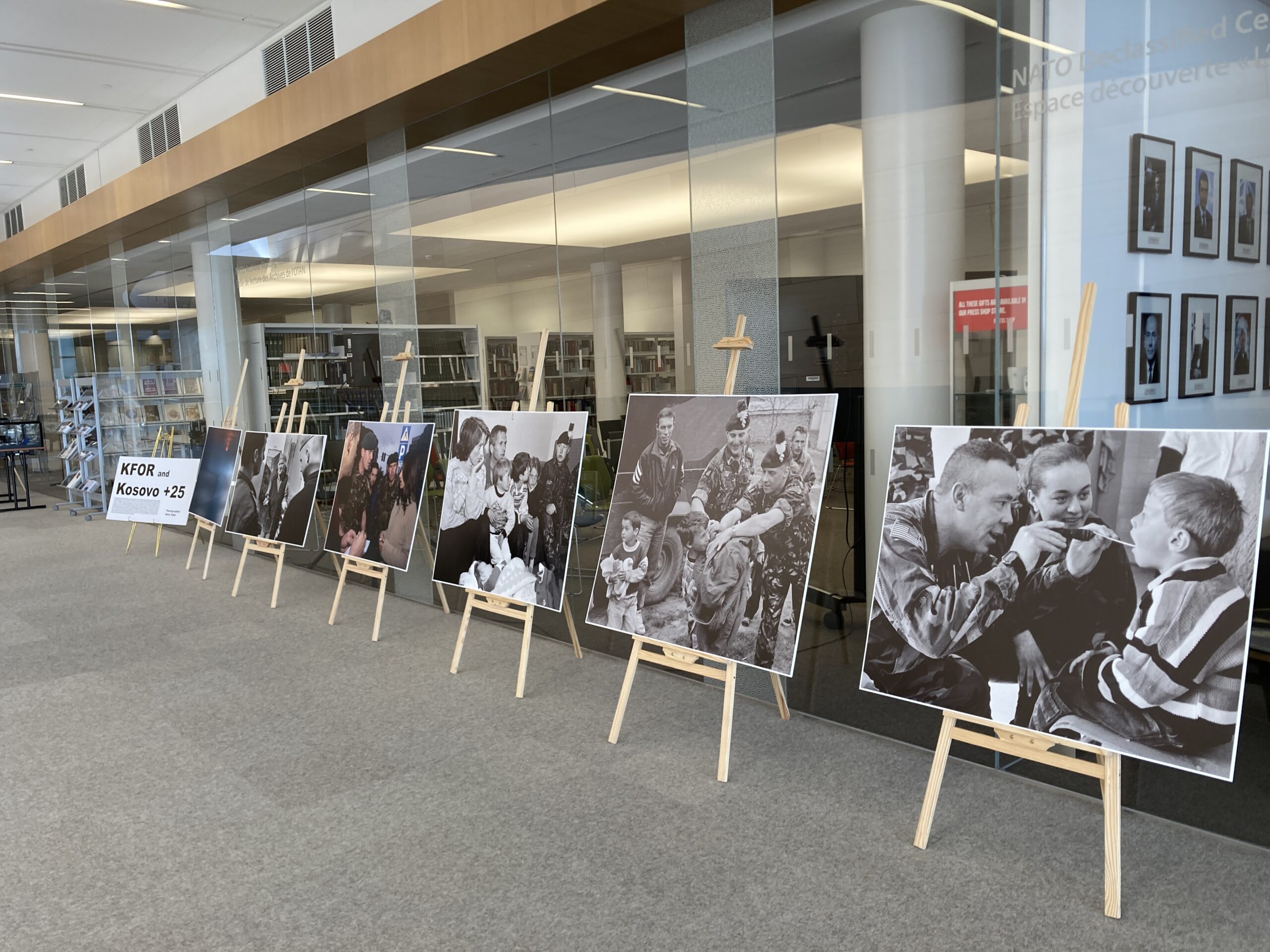
The exhibition comprised large-format images and a selection of photobooks, presenting just over 100 images from the 250 image exhibition.
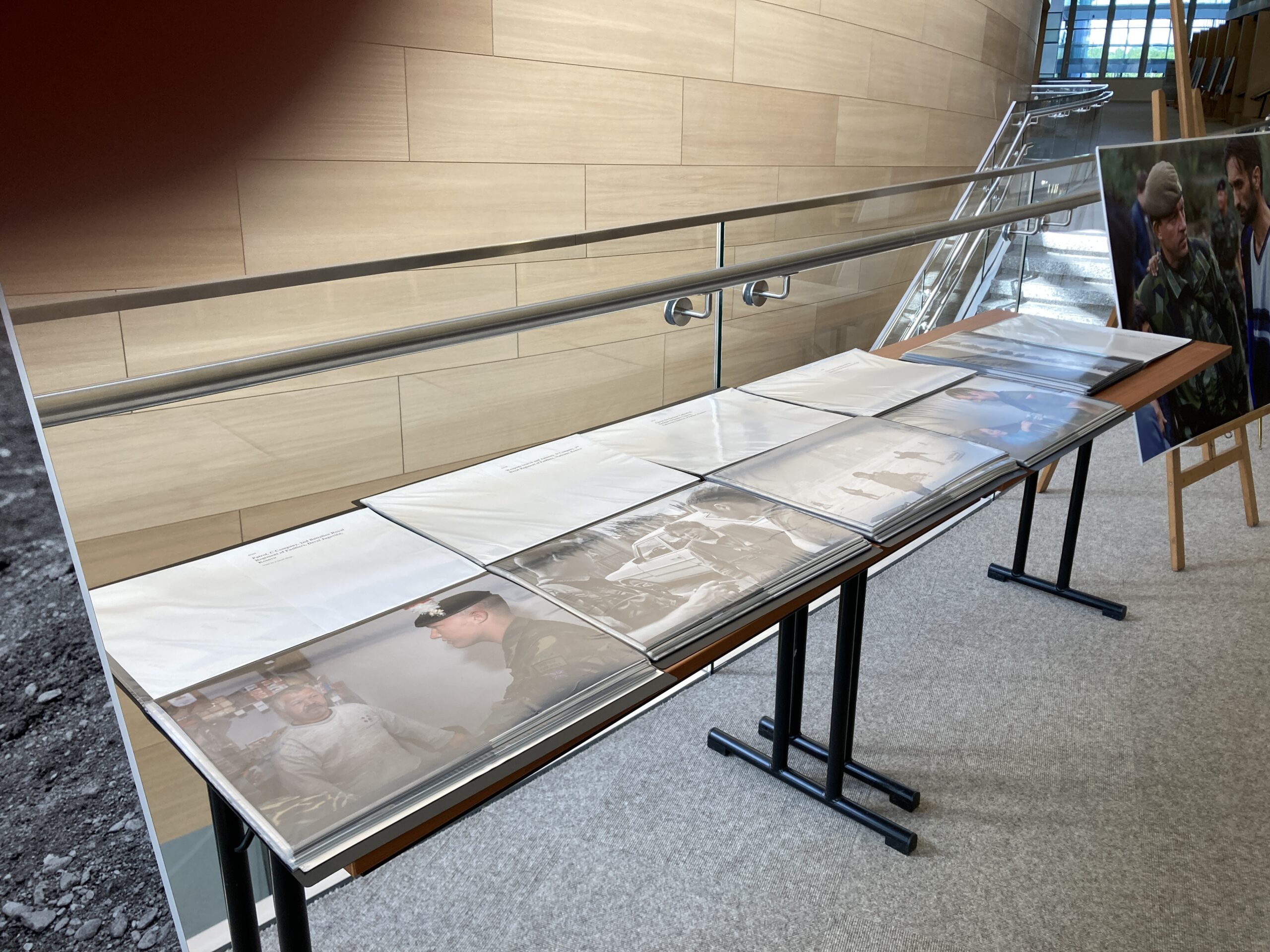
Each photobook contained images from the photodocumentary reflecting some of the NATO countries and regiments present at the event – 1st the Queen’s Dragoon Guards, Royal Regiment of Fusiliers
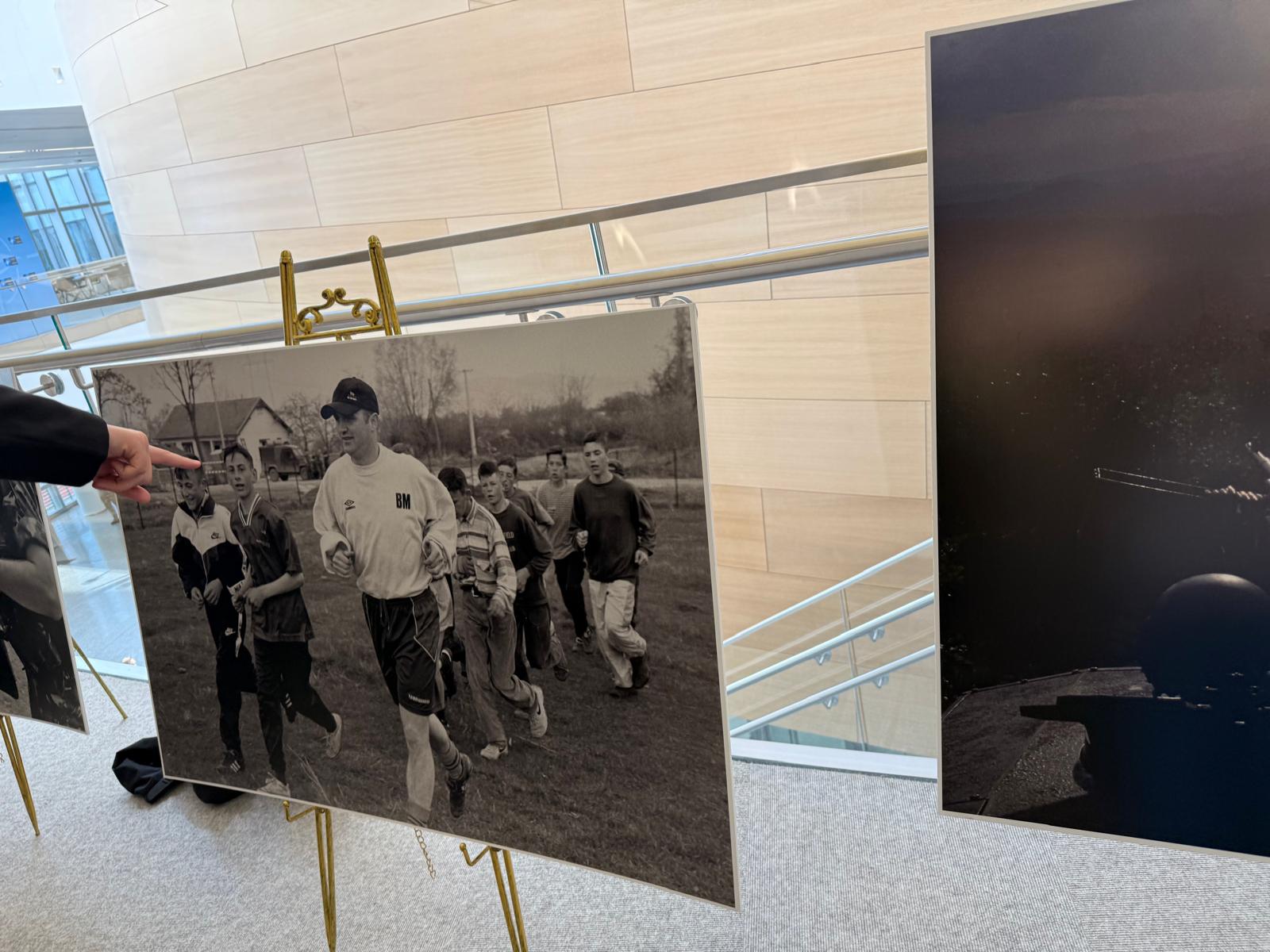
One of the images that drew particular interest ws that of Billy Miller, Royal Regiment of Fusiliers, leading a team of young men to play football, something they all wanted to do but did not have the kit for. Billy organised this and a prerequisite for being on the team was that no-one asked about the families of the young men. This was a powerful route to bring communities together. Hate and intolerance were put aside for the purpose of playing the game and on match day, the families were all present. This was an effective approach used by Billy and his fellow soldiers, experience gained from their previous operation in Northern Ireland.

Another iconic image in the exhibition was of this girl with her puppy in a Roma village. She is a living example of resilience and hope, and that even in the most challenging of circumstances, there will always be these special ‘moments of time’. This image highlights an important facet of the photodocumentary – its value for anyone who has an interest in images and how they tell stories. The images are not staged or posed, which leads to discussion on integrity and honesty in telling a story. Issues such as how visual images shape our perceptions, how images can be manufactured or distorted, spreading disinformation and the need to be critical thinkers are vital considerations in today’s world where hate/intolerance is spreading, particularly online.

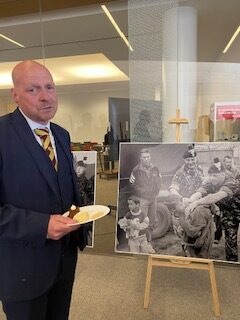 How KFOR provided protection for all communities is demonstrated in the images. On the left, a KFOR soldier is pictured with an elderly Serb man in his home, who is not able to go out for fear of retaliation. The soldier checks on his welfare and needs. On the right, Paul Davies standing by the image of himself 25 years ago handing out aid, in this case blankets and toys, to a recently returned ethnic Albanian refugee family who have come back to what remains of their home.
The Guests
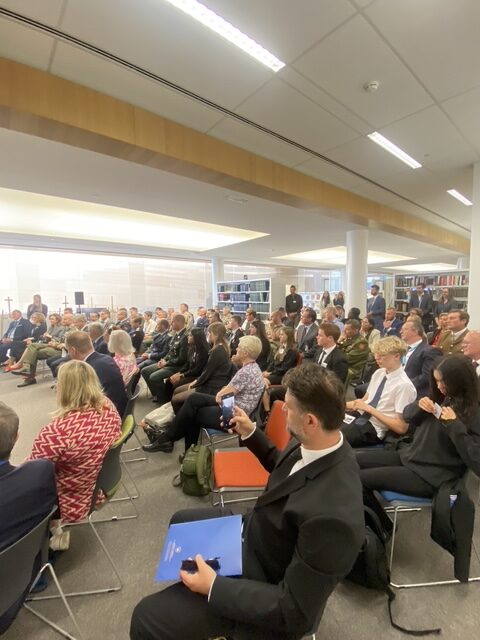
A packed audience, including the Permanent Representatives and Deputies of the NATO countries together with guests who had travelled from the UK to be at the event, listened to the opening presentations which provided a description of the background to the photodocumentary, the special access given to the photographer, why it was important 2000-1 when it was produced and its continued role and value today.
The Kosovo Delegation
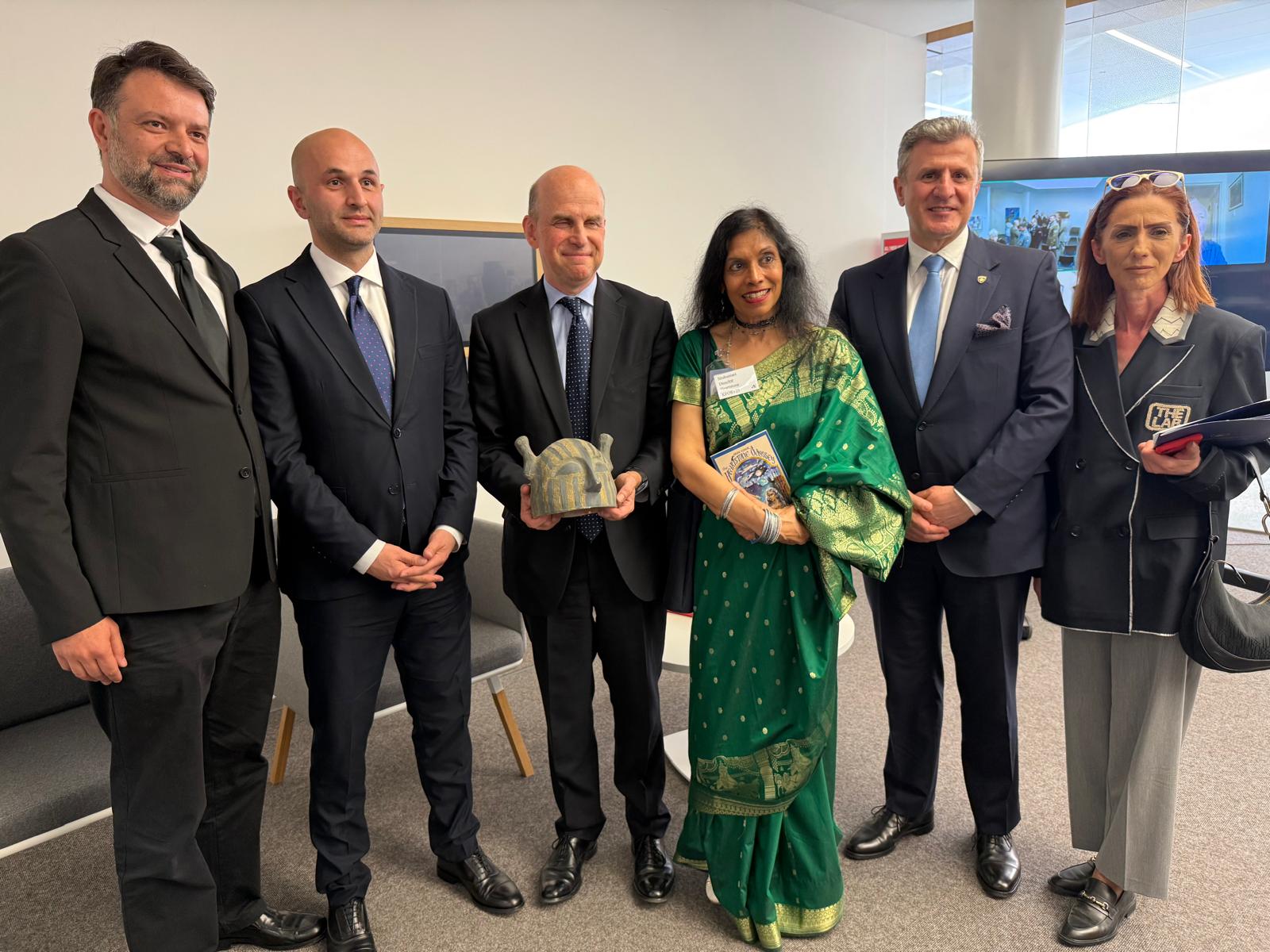
A special gift was presented by the Kosovo delegation to UK Permanent Representative to NATO Angus Lapsley. From right to left: Ms Vjollca Aliu – Director, Kosovo National Museum, HE Mr Ilir Kapiti – Kosovo Ambassador to the UK, Sitakumari – Director, Heartstone, Ambassador Angus Lapsley, Gen Secretary Ministry of Culture, Youth and Sports – Mr Bislim Bislimi, Mr Alban Bakija – Curator Kosovo National Museum.
Viewing the Exhibition
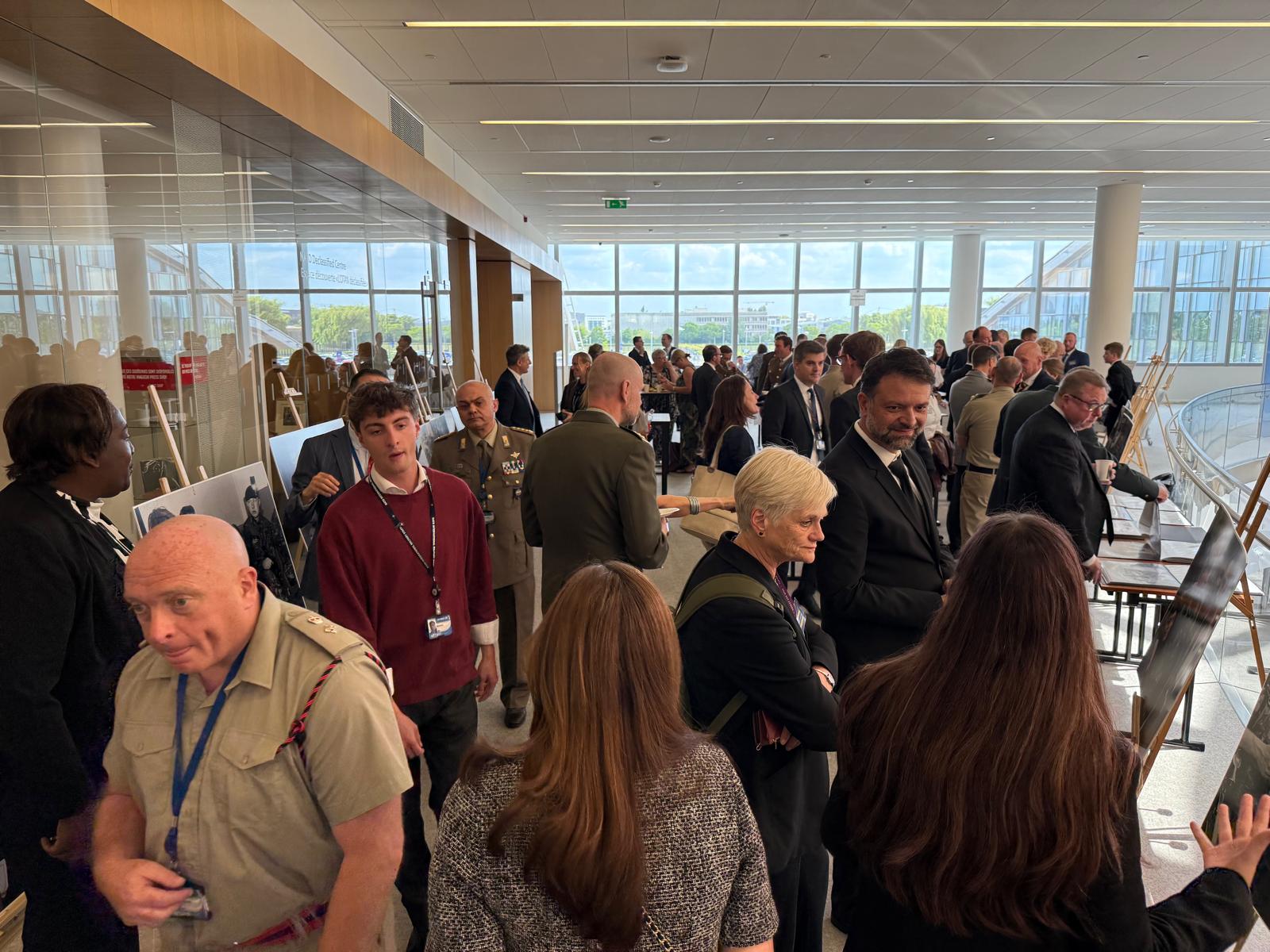
Following the opening presentations, all guests were able to view the exhibition hosted by the presenters – veterans from the images, current serving soldiers, former refugees of Kosovo now resident in the UK and the Heartstone Youth Ambassadors.
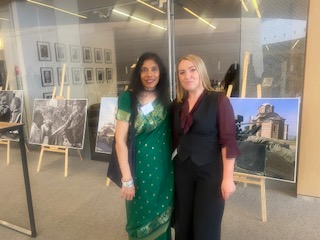
To help bring the exhibition ‘to life’ alongside Sitakumari, Rina Bujupi was at the event. Rina, from Voices of Kosovo in Manchester, has personal experience of the period of the story having fled from Kosovo at the height of the war in 1999. She is now resident in Manchester and assisting with the next exhibitions.
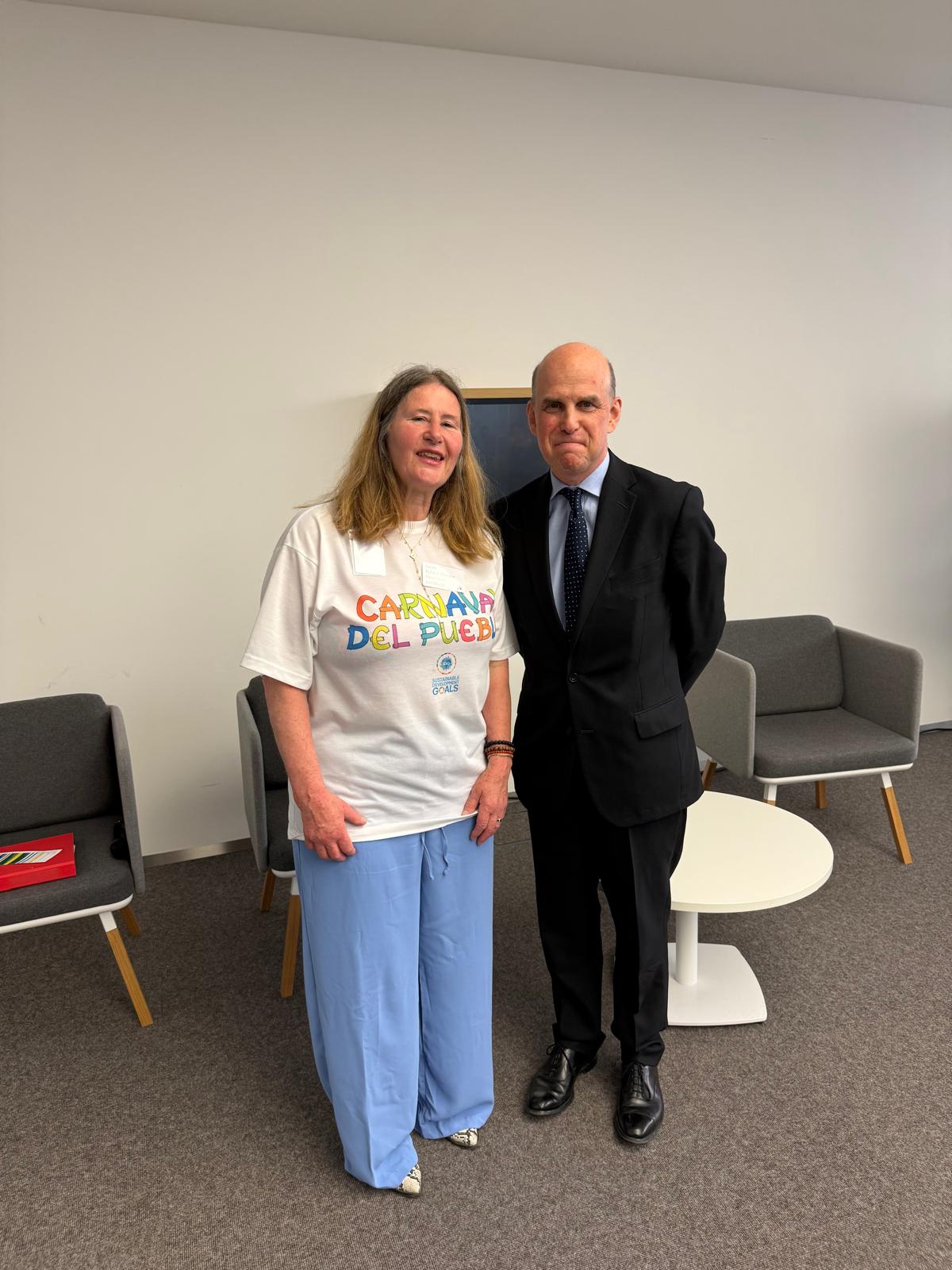
Nuala Riddell-Morales was the other core member of the Heartstone team at the event. Director of Carnaval del Pueblo in London, she has been instrumental in helping to take Heartstone stories to Latin American audiences and is now a key part of the Global Story Circle. She is pictured here with Angus Lapsley.
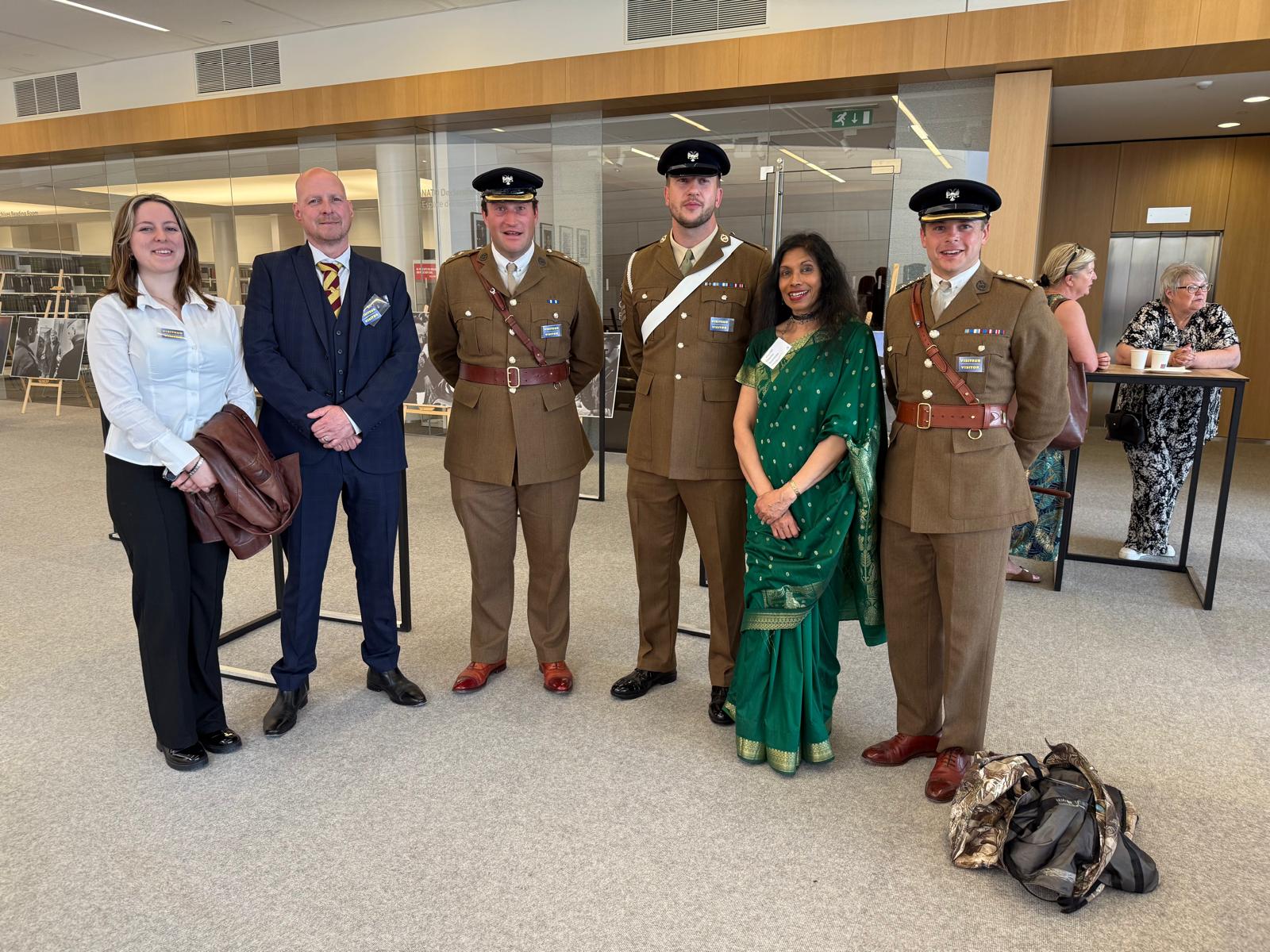
One of the regiments featured in the story is 1st The Queen’s Dragoon Guards. Three soldiers had travelled from the UK to be at the event and lend life to the images. From right to left: Cpt Edward Cooper, Sitakumari, Staff Sgt Jonathan Canning, Lt Danny Seales. Cpt Edward Cooper said:
‘It was a great privilege to attend the exhibition on behalf of the serving Regiment. Our Regimental history is so important to us as it marks the sacrifices made by our forebears in their service and the close family ties of our unit, as shown by Staff Sergeant Canning recognising his uncle in one portrait. The ‘KFOR and Kosovo +25′ exhibition was particularly poignant as we have A Squadron QDG currently serving in KOSOVO as KFOR.’
Also present was Paul Davies, second from left, one of the soldiers from the Royal Regiment of Fusiliers pictured in the images, now able to tell his story 25 years later. He is pictured with his daughter, Molly. Both had travelled from the UK to be at the event. The next phase of this project includes tracking down more veterans who are in the images to bring their stories into the exhibition. Paul said:
‘It always amazed me to see the resilience of the children in difficult conditions, they brought a sense of purpose for me being there. And they always had a smile for the troops which brightened even the darkest times whilst I was there. These images capture those moments and take me back there.’
The involvement of veterans from the images is providing, not just an insight into what was happening at the time but also helping to answer the question, how much do you feel you achieved and what you feel is the importance of this story for today’s audiences, in particular, the next generation.
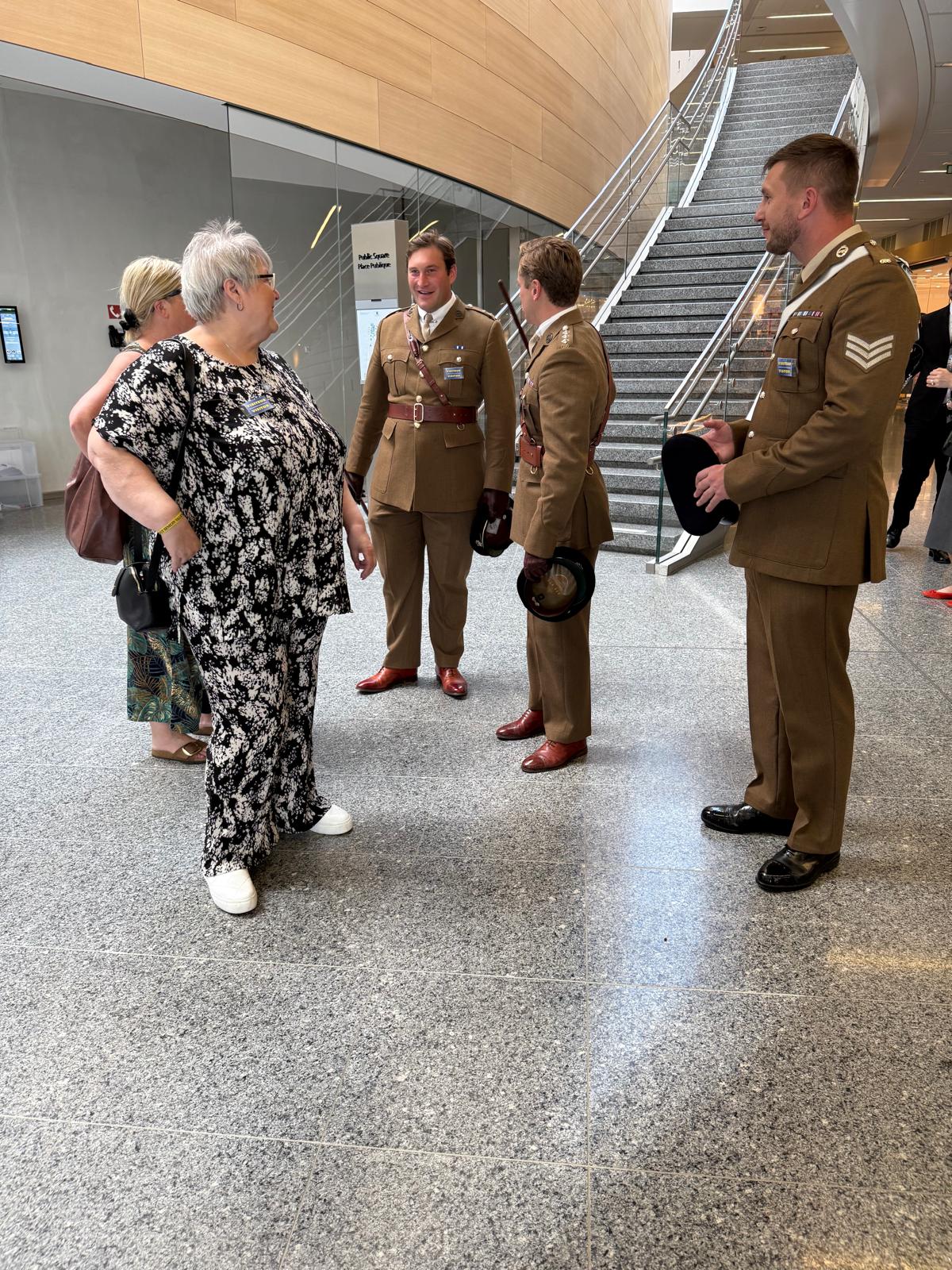
Another important presenter in the exhibition was Carol Valentine, pictured here at front left with the QDG soldiers. Carol is the mother of Cpl Simon Valentine, one of the soldiers in the images from the Royal Regiment of Fusiliers. At age 19 in Kosovo he achieved remarkable outcomes for refugees and villagers and is one of the important ongoing stories in the exhibition of how it is possible to ‘make a difference’. Tragically, he was killed on active duty in Afghanistan a few years later. Heartstone is honoured to have the presence of Carol, who has attended all the major exhibitions of this story to date and in the process, keeping Simon’s memory and what he was able to achieve, alive. She said:
‘In a room of several nationalities and a vast age group the pictures told a story. one that should never be forgotten. Sometimes education is in the eye of the beholder ….’
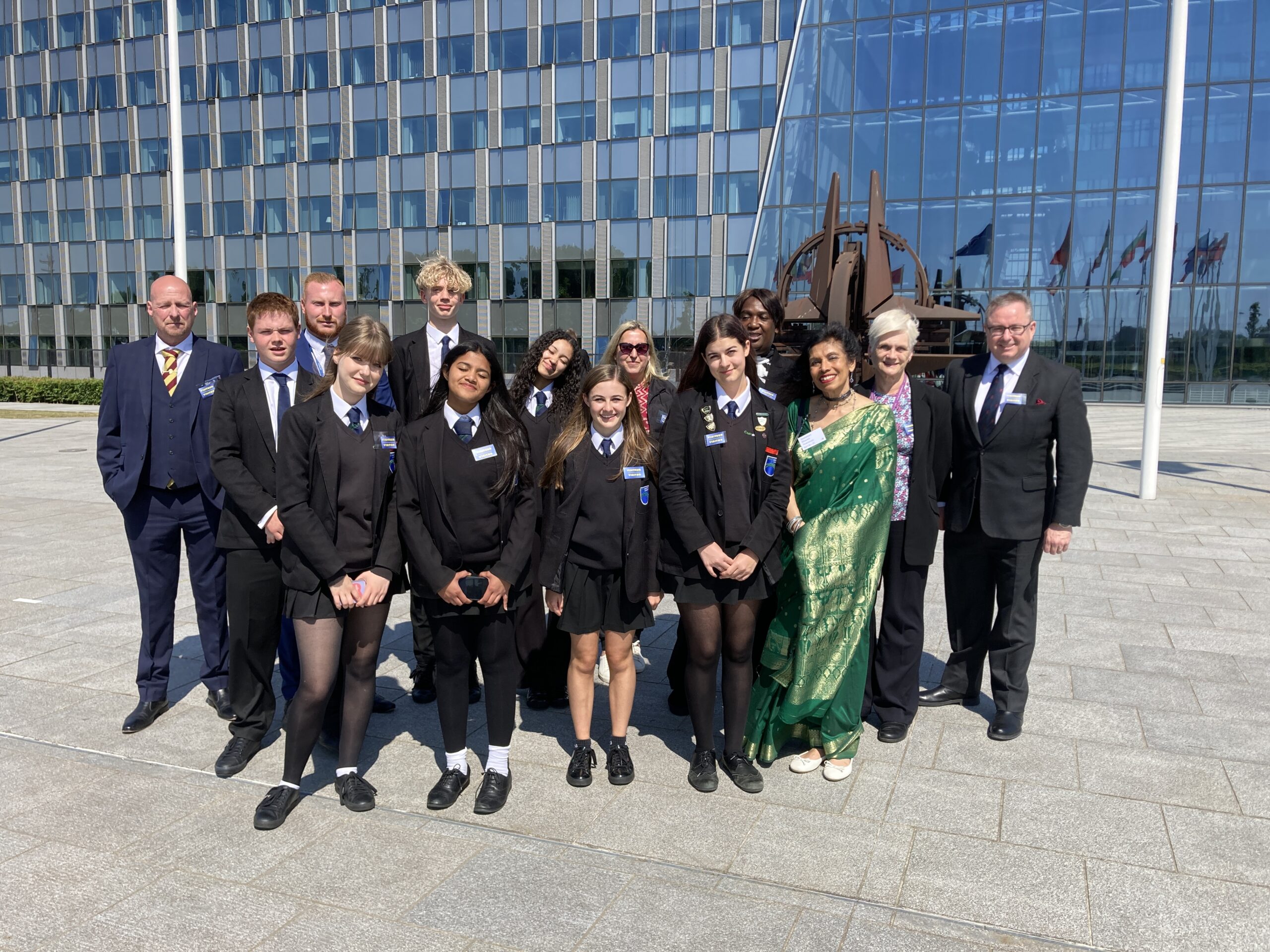
The final group of presenters in the exhibition were a team of eight young people, the Heartstone Youth Ambassadors from Oasis Academy in Croydon, London, pictured here with their teachers and Sitakumari at right. Back row from right – Dr Chris Lewis, Babcock International, one of the sponsors of the exhibition, Penny Smith-Orr – instrumental in seeing the extension of Story Circles across London, Lorna John – the visionary teacher at Oasis Academy, who initiated Story Circles four years ago with these young people and seen them grow into who they are now. These young people brought the exhibition ‘to life’ alongside the other presenters. They excelled in their role as presenters alongside the veterans, serving soldiers and Kosovan community representatives, in the process setting a standard for all forthcoming exhibitions which will follow a similar format both in the UK and beyond
They also spoke of their experience of the book ‘The Heartstone Odyssey’ now part of the next phase of the project with the National Museum of Kosovo which, together with the exhibition, is part of the Global Story Circle.
Lorna said:
‘Story Circles rooted in the Heartstone Odyssey and Heartstone photostories are more than just book and image discussions—they’re catalysts for transformation and community-building. Since launching two Story Circles four years ago to 11-year-old students, they have become citizens for change on a range of local and global issues. Their proactive passion and drive has been cemented by their measurable commitments made reflecting on the story’s messages which have all been self-led and visible at every staging of this story they have been part of, including the Tower of London, the House of Commons and now at another prestigious event at NATO HQ.’
The Heartstone Youth Ambassadors: Archie Prescott, Jack Geeves, Oscar Tanfield, Isabella Awadalla, Eve Barnes, Ayleena Jaiswara, Maja Szymanska, Annabelle Newman.

The Next Phase
11 NATO countries were represented at the event through their Permanent Representatives and Deputies. Pictured here are two members of the Greek delegation looking at the image showing KFOR protecting religious sites, in this case a mosque. The next image depicted KFOR protecting a church. Heartstone is now in the process of contacting all the countries who have expressed interest in seeing the exhibition and Global Story Circle take shape in their own respective locations, thus helping to grow the audience reached with this story.
Working with the National Museum of Kosovo
Mr Bislim Bislimi and Ms Vjollca Aliu are pictured here by the image of the returned ethnic Albanian refugee family and Cpl Simon Valentine, which has impacted on audiences throughout the UK and beyond. He spoke of the new expanded exhibition taking shape for the National Museum which will include upto 250 images, the stories of civilians from the images (currently being identified for this purpose) and inclusion of a memorial and acknowledgement of the role of KFOR making this a unique exhibition 25 years on.
Finding the Soldiers in the Images
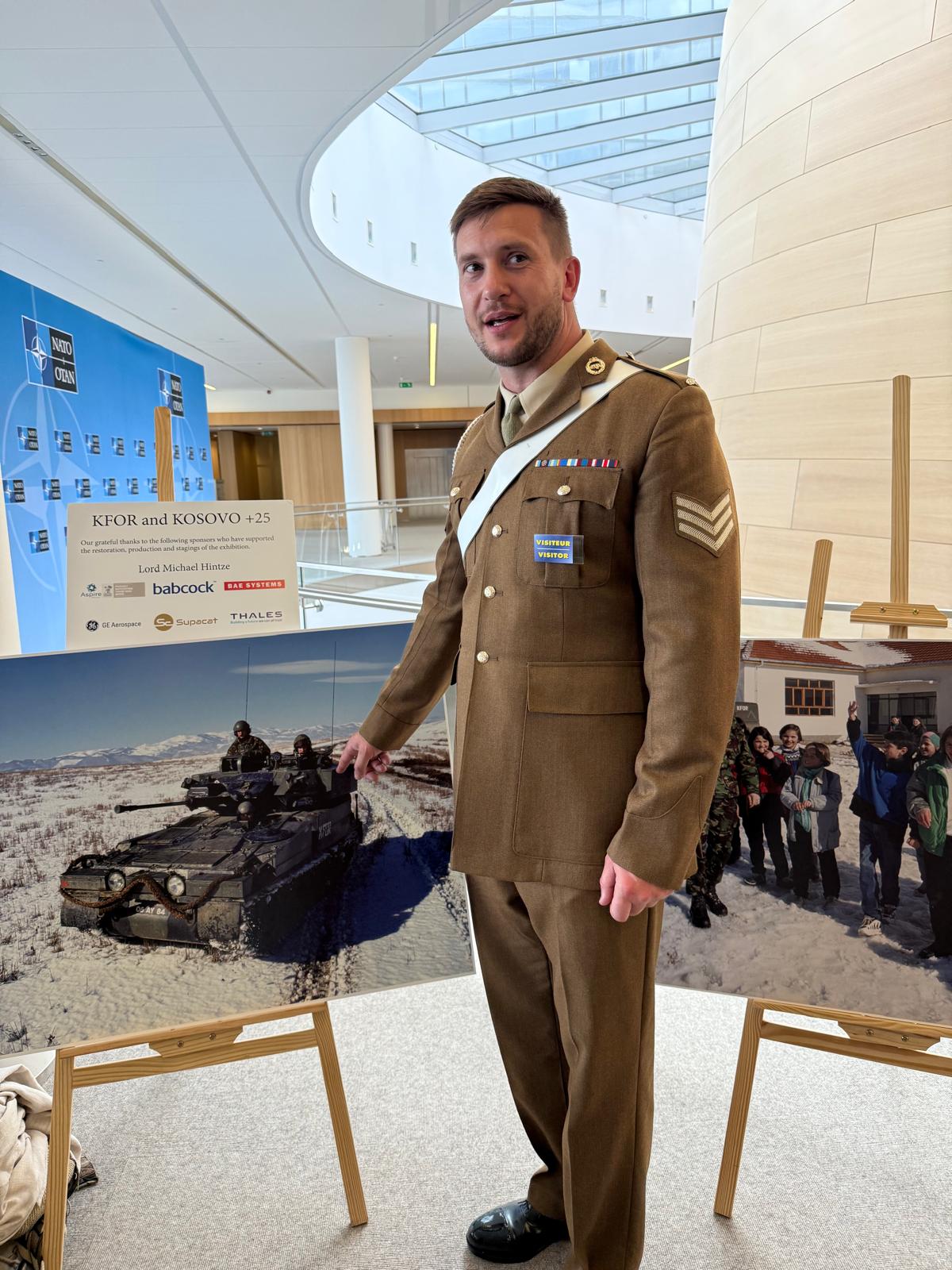
Alongside locating the civilians, the soldiers in the images are also being located to similarly add their stories, 25 years on, into the new exhibition. Some of those already located were at the exhibition. This serving soldier, Staff Sgt Jonathan Canning, from 1st The Queen’s Dragoon Guards recognized his uncle in the tank and will be contacting him with the purpose of bringing his involvement.
Work has already started on this with the Royal Regiment of Fusiliers and 1stThe Queen’s Dragoon Guards. The next regiment to participate, who are in the photostory, are 45 Commando based in Arbroath in Scotland.
Meeting Representatives of the Delegations
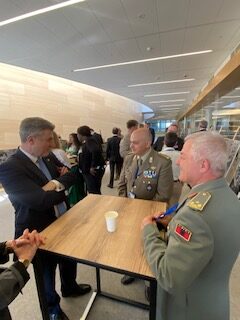
The exhibition provided an opportunity for external guests to meet several of the NATO Delegation Permanent Representatives and their Deputies. Ambassador HE Ilir Kapiti is pictured here with the Italian NATO Delegation.
This opportunity for people from different worlds to come together, including across generations, to have meaningful discussion and dialogue, build empathy and understanding is an important facet of all Heartstone stories and the exhibitions, events, publications and projects which present them.
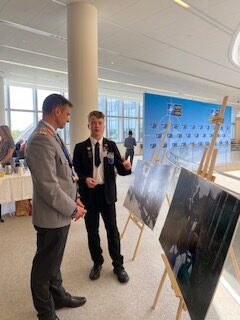
Heartstone Youth Ambassador Archie Prescott is pictured here (left) with one of the Permanent Representatives explaining how the images tell a story, what is being portrayed and how ordinary people rebuilt their lives in post-war Kosovo. The image depicts primary age Serb children being taken to school with an armed KFOR guard for protection. Through this image and others like it, this story can be used with children of the same age and older to look at conflict and hostility in our world today. What adds to the significance of this story, however, is the ability to see what has happened 25 years later, and be in contact with people who were part of the story then, to see how this period changed their lives and that they were able to successfully come through the most challenging of circumstances. This helps raise another important question – whether or not to intervene, a question raised at the start of the conflict by the key players and as relevant today as it was then for everyone, from international level to grass roots community level.
The Global Story Circle
The announcement of the Global Story Circle was made from this event, initially connecting Kosovo, Alabama and Queensland Australia. The aim is to expand into other countries from this point on, using Heartstone stories to bring people together across different backgrounds, faiths, races and cultures, to see a common humanity, and understand the need to work co-operatively together in the face of some of the most difficult issues we face in the world today.
In this story, why peacekeepers are needed and the important role they continue to fulfil was effectively presented. The next staging of ‘KFOR and Kosovo +25’ will happen in Manchester, UK in early 2026 as well as the opening of the new exhibition at the National Museum of Kosovo. The UK NATO Delegation and Ambassador Ilir Kapiti are continuing to assist with the next phase of ‘KFOR and Kosovo +25’ as discussions begin with the NATO countries introduced at this event for exhibitions and projects in Europe.
Gen Sir Nicholas Carter, GCB, CBE, DSO said:
“This exhibition is timely given the turbulence of current global events – for it reminds us that it is possible for the International Community to come together to help a country riven by ethnic tensions.”
Prime Minister Mr Albin Kurti made the following statement at the National Museum of Kosovo event in June 2024, reproduced here as it remains of relevance today:
Heartstone is grateful for the support of the following sponsors who have supported the restoration, reworking and stagings of the exhibition :
Ministry of Culture Kosovo, Lord Michael Hintze, BAE Systems, Babcock International, Thales, Aspire Defence Ltd, Supacat, GE Aerospace
And for the support of the UK Joint Delegation to NATO, especially Saffron Higgins, for the staging at NATO HQ.
We are also grateful for the support of Manchester Aid to Kosovo (MaK), a British charity formed in 1999. MaK supports recovery in Kosovo (and the UK) by providing opportunities, resources, and developing partnerships. MaK works in the following areas: education, art and music, sport, construction of the Manchester Peace Park in Podujeva, promoting justice and equality, collecting and distributing aid and family support.