

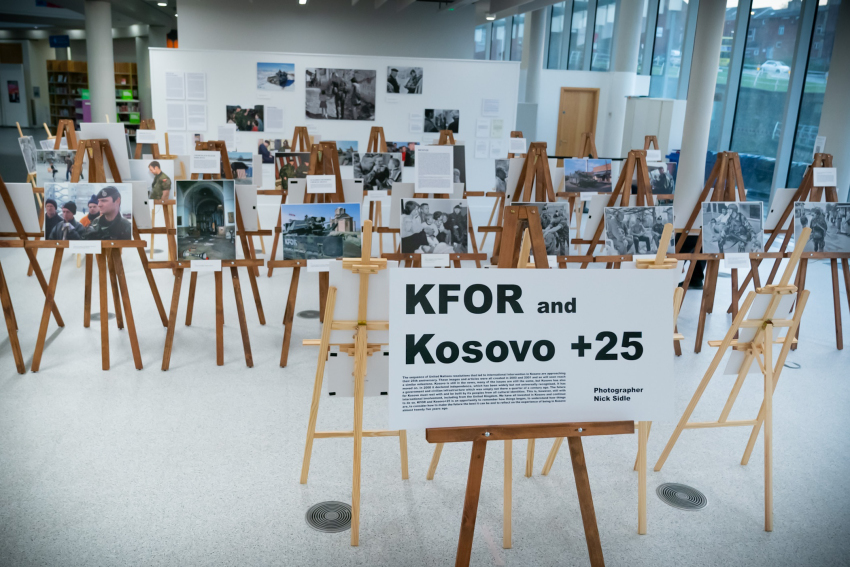
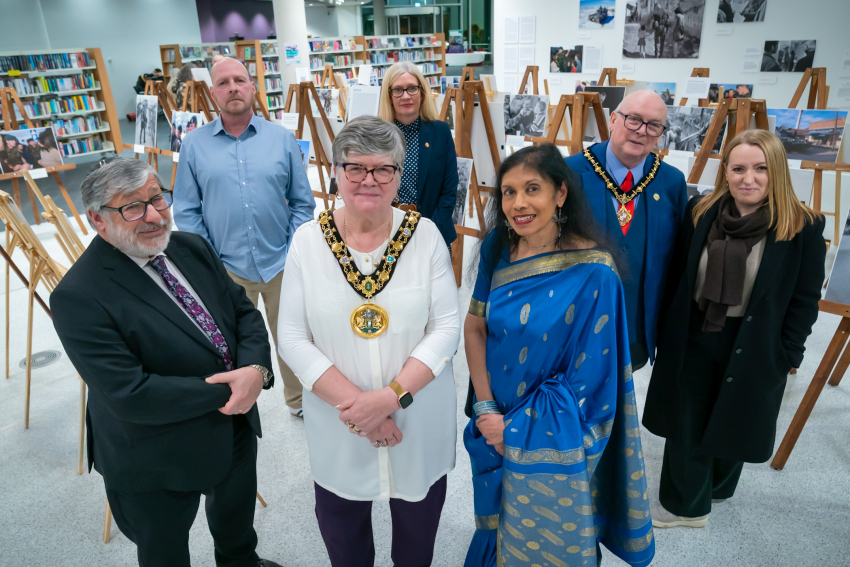
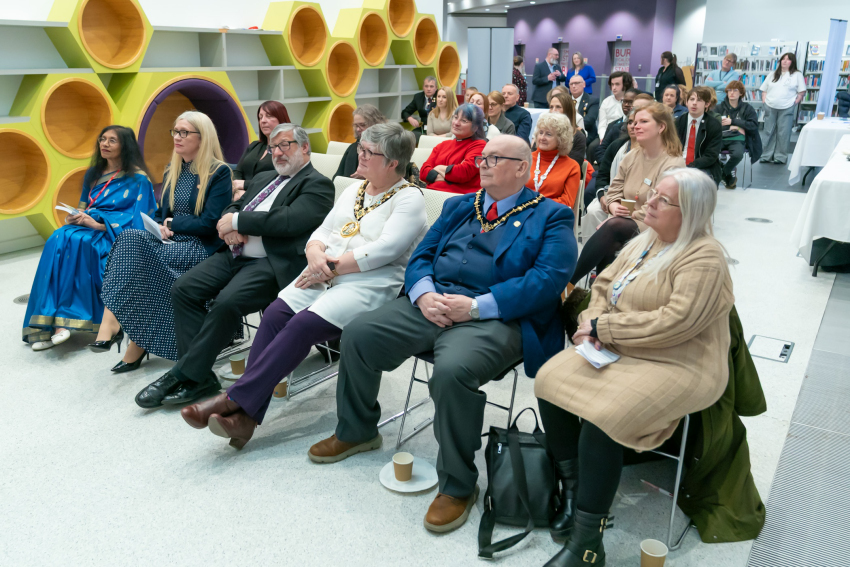
The first presentation of ‘KFOR and Kosovo +25’ in Greater Manchester was officially unveiled on January 15th 2026 by the Mayor Councillor Janet Emsley at Number One Riverside in the town centre. She was joined by special guests including Rebecca Tarran, DL, veteran Paul Davies – one of the soldiers pictured in the exhibition, Rabbi Warren Elf, co-leader of interfaith organisation ‘Faith Network 4 Manchester’, Rina Bujupi, a child refugee from Kosova, evacuated to Manchester at the time of the war and the photodocumentary whose family set up home in the region, and other VIPs for the opening.
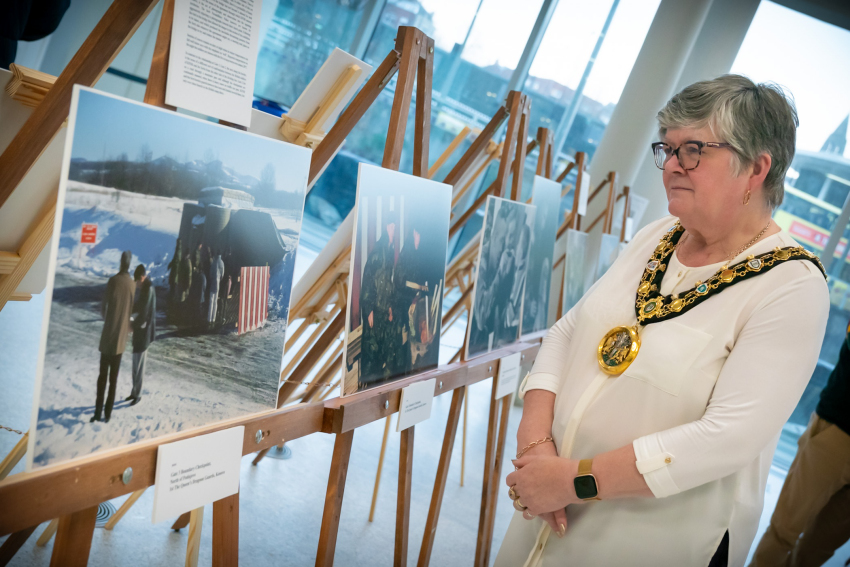
Mayor Councillor Janet Emsley, right, the council’s lead member for the Armed Forces said:
‘This unique exhibition covers a period of history that must not be forgotten. Twenty-five years later, this story holds many lessons for our time in a world where many are living with conflict, and the same issues of prejudice, intolerance and hate. It’s also a positive story, about human resilience and hope in extraordinary circumstances and the importance of people and nations working co-operatively together to achieve positive outcomes.’
She is pictured below with Heartstone Director, Sitakumari, who organised the original access for the assignment.
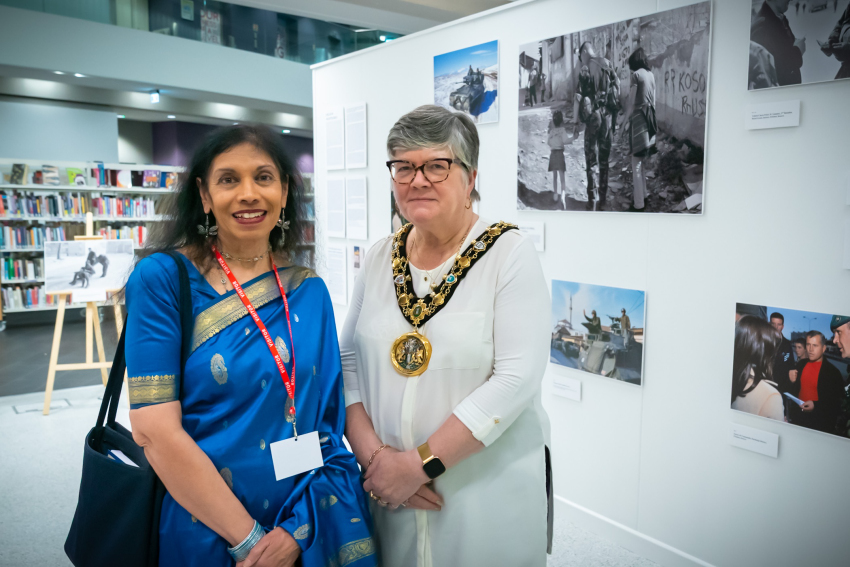
Sitakumari presented the background to the exhibition, the need to tell the human story at the time in a country just coming out of interethnic conflict and war:
“In 1999, when the war happened in Kosova, there was a need to tell a more balanced story. I was able to get access for Nick Sidle, Heartstone’s photographer, to join several regiments that were part of KFOR. He brought back a story nobody else had. It wasn’t harrowing, it was a story of people living after the war, rebuilding lives and homes and in the process, the story challenged commonly held perceptions at the time. For visitors today it’s a fascinating look along the boundaries between photojournalism and art. The messages of this story, told 25 years ago are so relevant today – why we must not turn a blind eye to prejudice and hate, and we need to understand the importance of co-operation. We really can overcome great challenges when working together.”
Sitakumari also presented the value of the artistic approach in telling this story:
‘World events are happening all the time but it is not long before the world moves on. Histories are written and often fought over about the largest themes and significances but all too often the stories of those who worked the hardest, achieved the most and deserve so much credit are overlooked and forgotten. To bring those stories to life and earn the attention they deserve demands storytelling of the highest order. In the 20th century and now into the 21st, that storytelling became visual and whilst there has been an increasing and global coverage, only a few practitioners have achieved more than the record and extended their documentary practice to become an art form that serves to go beyond the communication of events into the sharing of feelings, experiences and lives. This is what ‘KFOR and Kosovo+25’ is about, when the exhibition was first presented in 2001 and now, 25 years later in a new form restored, extended and updated for the present day.’
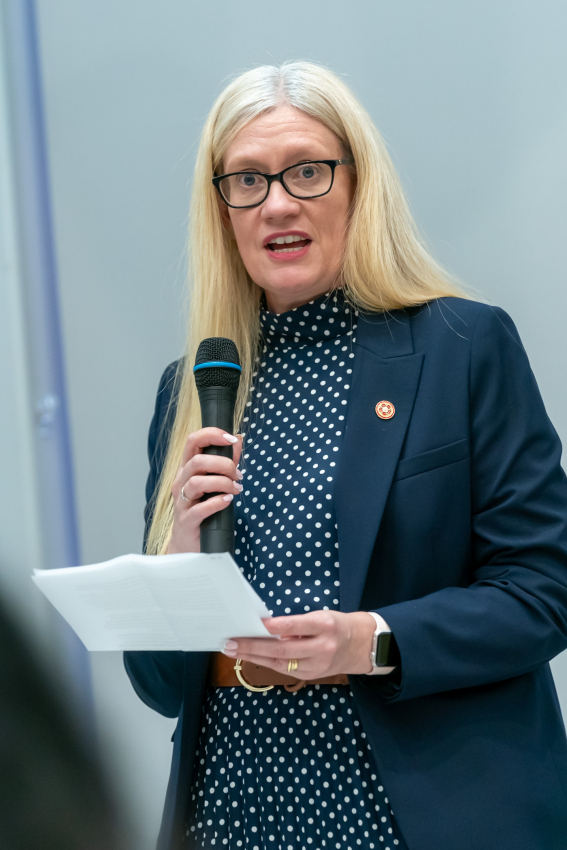 Rebecca Tarran, at left, Deputy Lieutenant, Greater Manchester , spoke of the importance of the exhibition at the current time. The context to remember is that the exhibition is a retrospective on a photodocumentary produced in 2000-1, entirely on film. As a result, there are sequences which establish the authenticity of the images. Heartstone and Nick Sidle, the photographer, are known for not altering content. In today’s climate, such verification is important and as a by-product, this exhibition can open up discussion on fake news and disinformation. She said;
‘I am delighted to attend he exhibition reception for ‘KFOR and Kosovo +25’. My name is Rebecca Tarren and I am a Deputy Lieutenant for Greater Manchester. I am also a history teacher and Head of Humanities and I wanted to share my perspective on why exhibitions such as this one currently on display in Rochdale are so important. The purpose of this exhibition, as I see it, is not simply to view photographs, but to engage with history, humanity and our shared responsibility to one another. Photojournalism is one of the most powerful tools we have to understand the world around us. It captures moments that cannot be recreated, moments that demand our attention and challenge our conscience. Through a single image, we are invited into realities far beyond our own lives – realities shaped by conflict, resilience, fear, courage and hope.
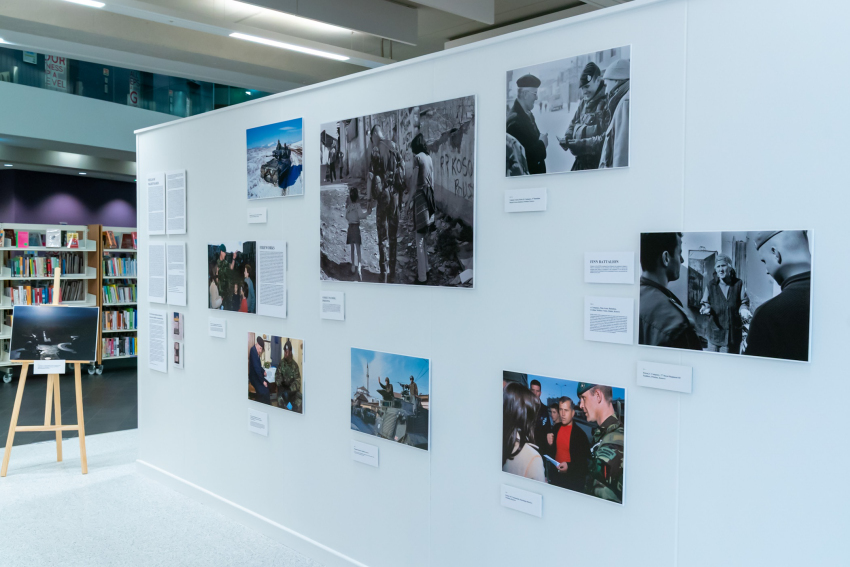
Photojournalism matters because it tells the truth when words are not enough through a universal medium which transcends language barriers and other boundaries. It documents events as they unfold and preserves them for future generations. In times of conflict and crisis photographs become evidence, memory, and testimony. They ensure that suffering is not hidden, that courage is not forgotten and that history is not rewritten or erased. In a world saturated with information and instant opinions, photojournalism cuts through the noise and reminds us of what is real.
Where history may be complex and painful, marked by conflict, displacement and deep divisions, there is also a story of international responsibility, of collective efforts to prevent further violence, and of the long and difficult work often required to maintain peace.
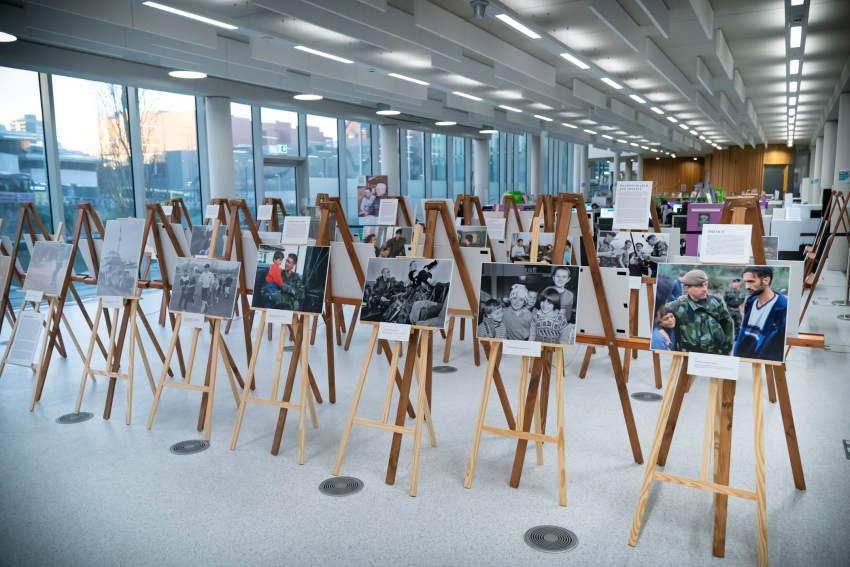
Through these photographs seen in this exhibition, peacekeeping is no longer an abstract concept discussed in political speeches or international reports. It becomes visible and human. We see the exhaustion, the vigilance, the uncertainty and the quiet determination of those who serve. We are reminded that peace is not a single moment or agreement, but an ongoing process that requires patience, restraint and courage. These images show us that peacekeeping is not about the absence of conflict alone, but about the protection of human dignity.
In today’s world, this message is more relevant than ever. Conflicts across the globe are often reduced to headlines, statistics, or brief moments of attention before the world moves on. Yet the consequences of these conflicts remain for generations. Photojournalism resists this forgetting. It insists that we look, that we remember and that we reflect, showing the real cost of instability and the real value of peace.
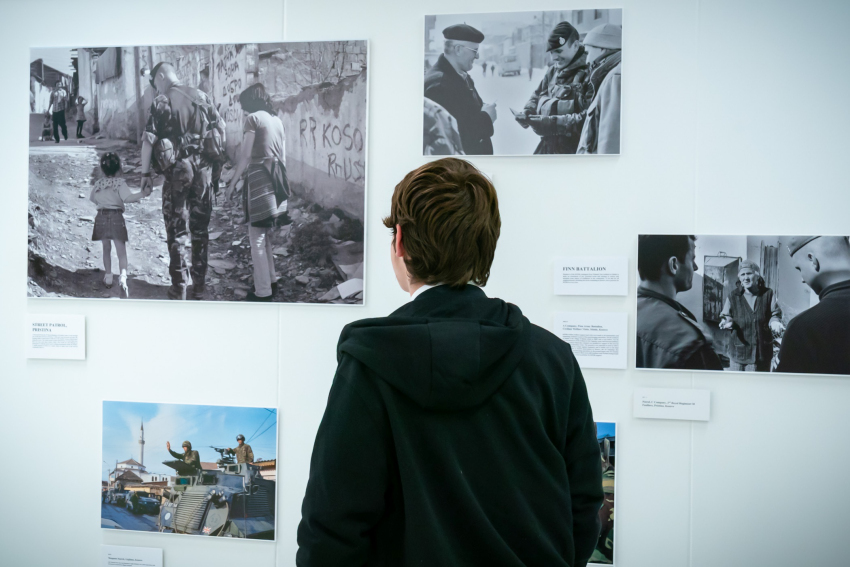
This is why exhibitions like this one are so important – not only for those who have lived through these events, but especially for younger generations. Studying history is essential for young people because it provides context, understanding and perspective. Without knowledge of the past, it becomes easy to take peace for granted or to underestimate how fragile it truly is. History teaches us that conflicts do not appear suddenly, they are shaped by choices, actions and failures over time. Indeed, history helps us to understand the world around and how it got to be that way. It also helps us to learn lessons from the past to ensure a brighter and better future.
For young peple, engaging with history through photojournalism makes learning deeply personal. These images transform historical events from distant lessons into lived experiences. When young people see the faces of civilians, soldiers and peacekeepers, history becomes something they can feel, not just memorise. It brings history alive and they begin to understand that real people – often not much older than themselves – were affected by these events and, in many cases, asked to make extraordinary sacrifices.
Studying history also helps young peple develop critical thinking and empathy. It encourages them to ask difficult questions: how do conflicts begin? What does responsibility look like in times of crisis? By confronting these questions early, young people are better prepared to become informed citizens, leaders and decision-makers, who value dialogue over division and peace over violence. That when we put aside our differences and work together, we can achieve great things.
It is important for people of all ages to see these exhibitions because seeing creates understanding and understanding creates empathy. When we look into the eyes of those captured in these photographs, distance disappears. We are reminded that suffering and hope are universal, regardless of borders, language or nationality. These images challenge indifference and push us beyond passive observation. They ask us to care and remind us of the power of hope, resilience, compassion and co-operation.
Photojournalism also serves as a bridge between generations. It allows those who experienced these events to share their stories, and it gives younger generations a way to connect with a past they did not live through. In doing so, it strengthens collective memory and ensures that the lessons learned through hardship are not lost over time.
Ultimately, photojournalism does more than document the past. It educates the present and shapes the future. By preserving moments of confict and peacekeeping, it helps us understand the consequences of our actions and the value of international co-operation. Exhibitions like this one remind us that peace is fragile, that it requires vigilance and that it depends on the willingness of individuals and nations to stand up for human dignity.
By engaging with these photographs, by studying history, and by encouraging our young people to do the same, we honour those who served, those who suffered and those who continue to work for peace. Most importantly, we reaffirm our commitment to building a world where such images are remembered, not as warnings ignored but as lessons learned.’
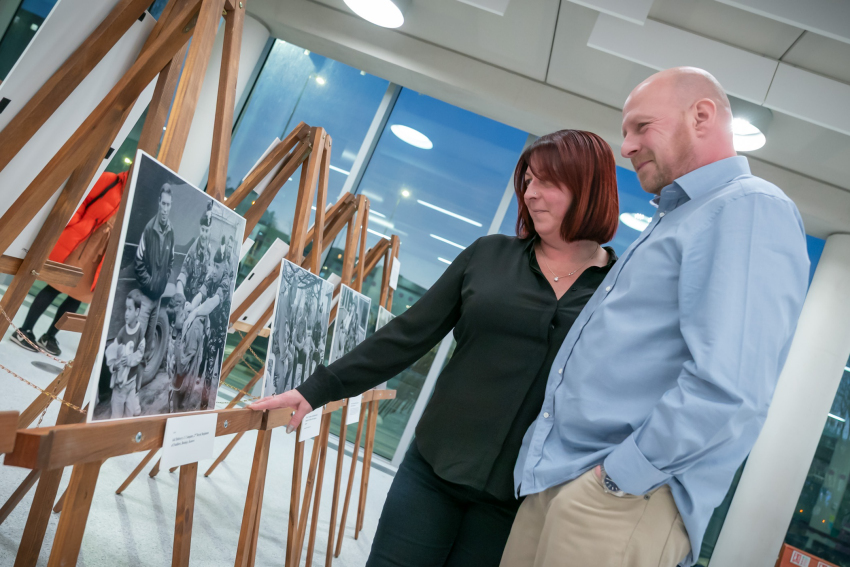
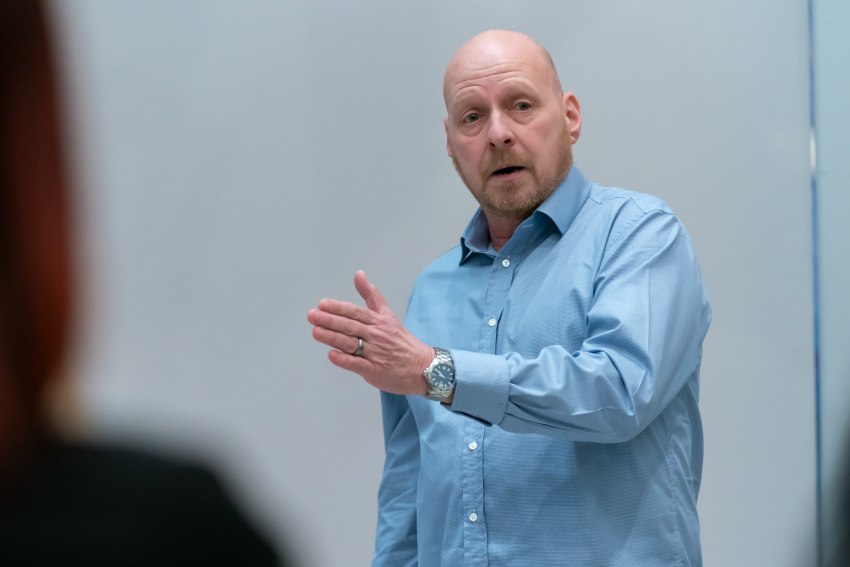 Paul Davies, at right, one of the soldiers pictured in the photographs, spoke candidly about his time stationed in Kosova and his personal experience of ‘ethnic cleansing’, the horrific events that led to the decision by the international community to intervene in this conflict and UN Resolution 1244, which led to active involvement in 1999 with nine countries coming together. Nick Sidle, the photographer, arrived in January 2000, at the time when refugees had started returning and the intensely challenging task of rebuilding had begun. Paul is pictured below with wife, Maria, looking at the photo with himself 25 years ago, handing out blankets, toys and other aid to children in the village the patrol had reached.
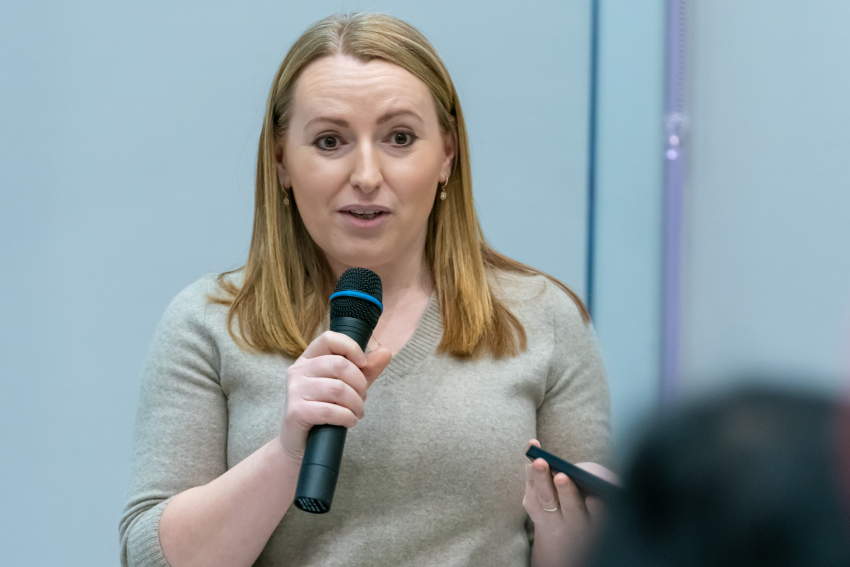
Rina Bujupi, at right, and her family have made their homes in Manchester after having been evacuated in 1999. Drawn to the opening image in the exhibition of a helicopter over Pristina, she spoke of her memories. She said:
‘It’s always really special for me to go to an event where Kosova is celebrated and stories are shared. For me it’s always relevant as it’s so personal. We should always remember the past and talk about it, especially with people who have not heard anything about the region before.’
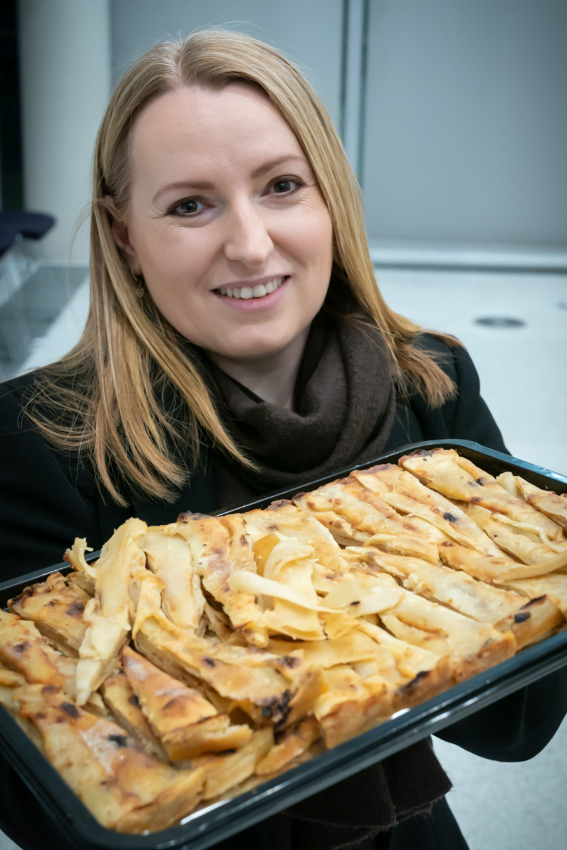
Rina now runs the Amphora Café in Sale, Greater Manchester, and she brought the delicious Kosovan pastries and sweets for the event, enjoyed by all!
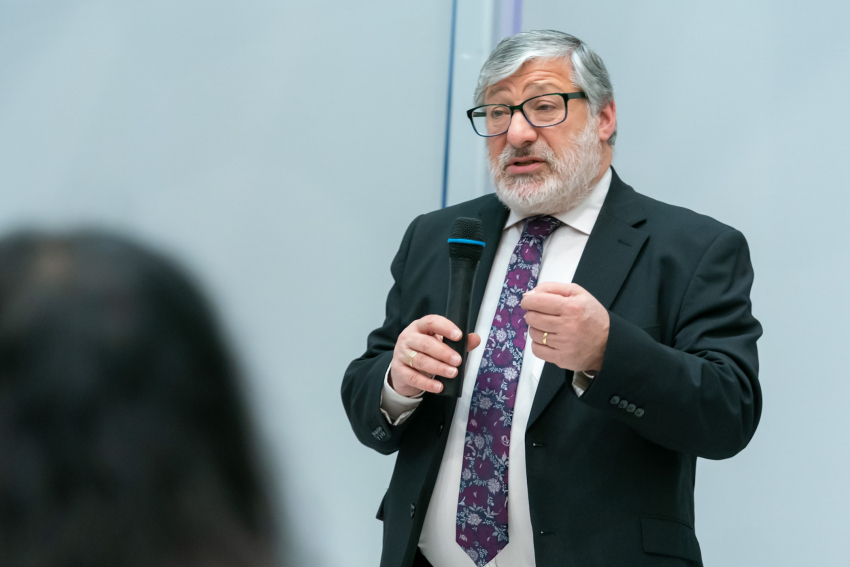 Rabbi Warren Elf, left, also highlighted the story’s relevance today for all communities. Prejudice, intolerance, hate can only be overcome when people come together, to see a common humanity. The exhibition provides a ‘metaphor’ to generate meaningful discussion/debate, look at difficult issues we are living with now but how from the recent past, we can see real examples of resilience and hope.
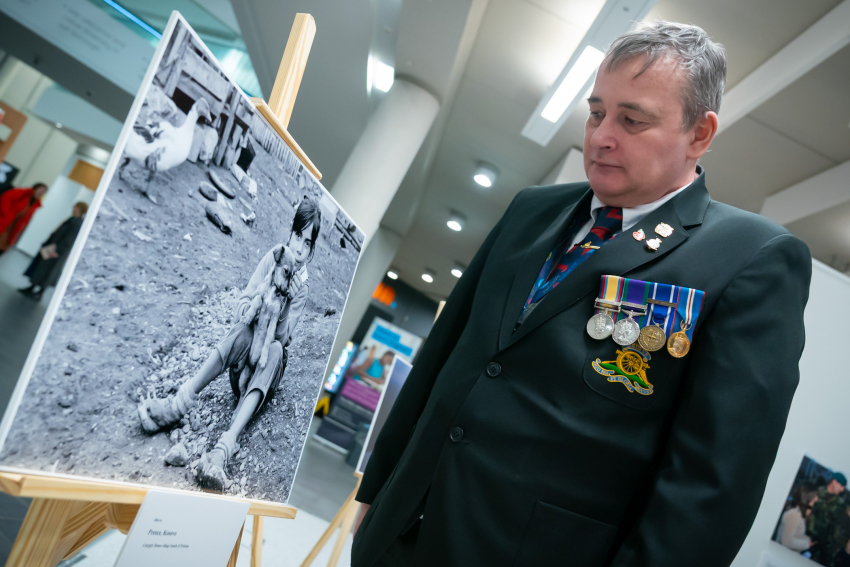
The exhibition provides a setting for local veterans, to speak of their experiences in a setting where they are able to meet the wider community, including young people, to give these experiences meaning and value in today’s world, in the process impacting on health and wellbeing for the veterans themselves in each area. Essential for this outcome is to know the images are not staged, posed or manipulated.
Crucially important in today’s world, the exhibition creates a setting for open and frank discussion on how images are faked, the role of AI, how that affects perceptions and in turn affects how people see each other, how disinformation spreads and in the process builds conflict and hostility.
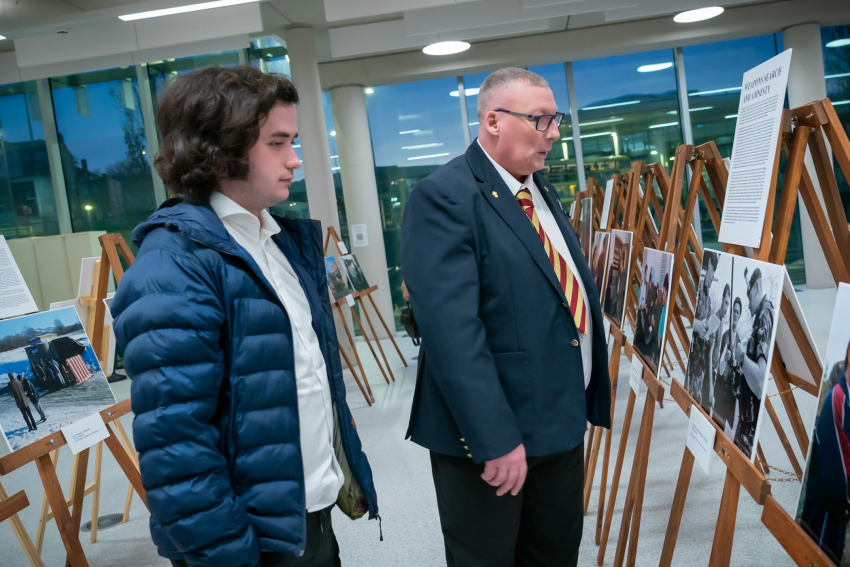
It is also providing a natural route for veterans to help raise understanding of what they did and how with next generations in their own families and communities. It is also an opportunity to share valuable personal memorabilia from the time, each with their own valuable and precious stories.
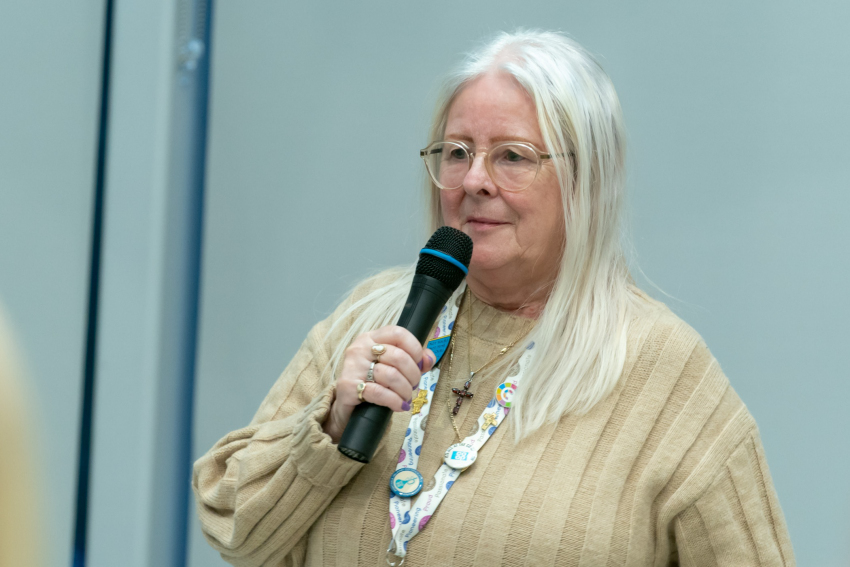 Councillor Sue Smith, right, Cabinet Member for Communities and Co-operation closed the event with thanks to Heartstone and everyone who has helped bring the exhibition to Rochdale. She said:
“Over the next few weeks we look forward to welcoming our diverse communities to explore the exhibition and reflect on the things that are so relevant in today’s world. It’s another highlight during our special year as Greater Manchester Town of Culture.”