


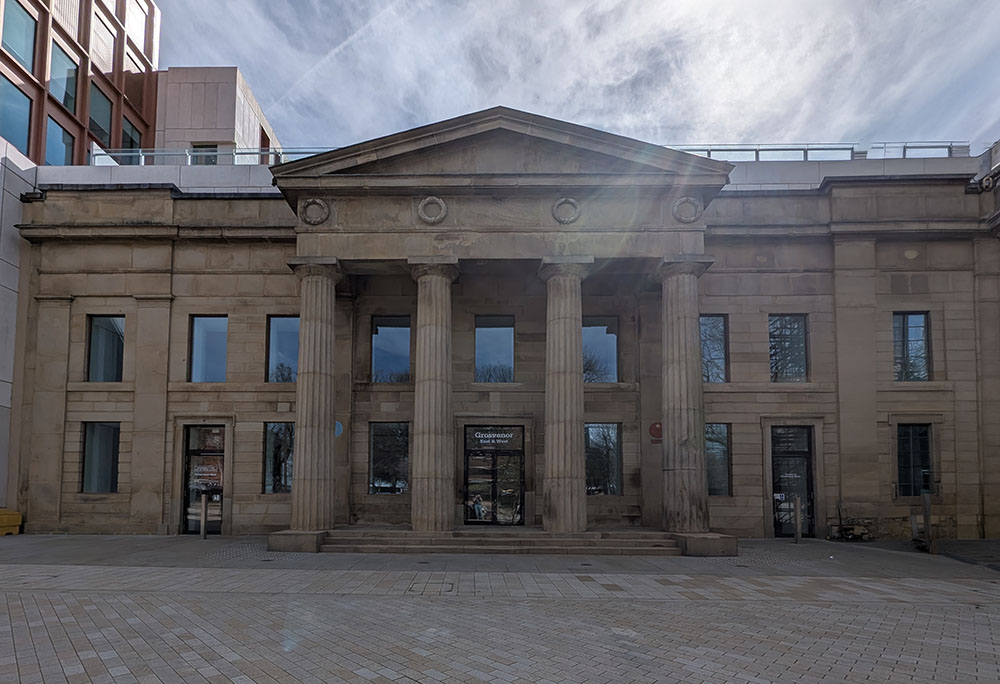
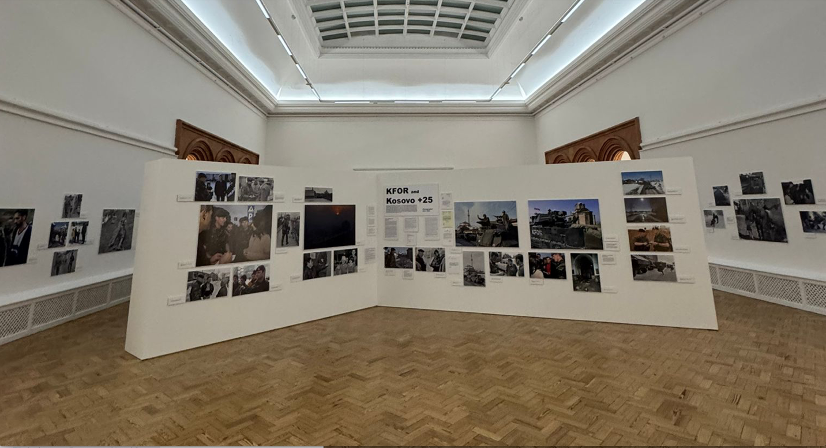
The ‘KFOR and Kosovo +25’ exhibition opened at The Holden Gallery at the Manchester School of Art , Manchester Metropolitan University on March 3rd 2026.
It included 100 images from the 200-image exhibition, featuring several individual stories from the photodocumentary produced by photographer Nick Sidle originally in 2000-1.
This is the second exhibition funded by The National Heritage Lottery Fund in the North West.
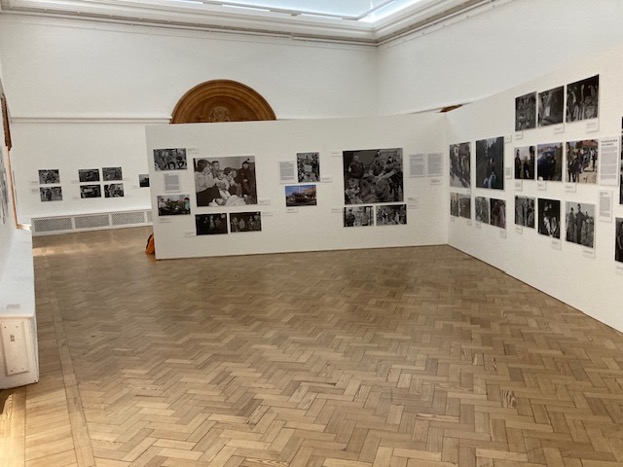
Lord Robertson opened the event online. He said:
“I have great pleasure in welcoming all those who have come to see this exhibition. The liberation of Kosovo in 1999 was a defining point in twentieth Century history – and a pivotal point in my life as well.
Reversing the ethnic cleansing of a part of Europe was neither easy nor pain free. It took immense amounts of diplomacy and negotiations and ultimately military might.
What this incredible Exhibition shows is the aftermath. Unlike other conflicts that aftermath had special and memorable characteristics. Warriors of the hardest kind became peace keeper and community builders in a remarkable fashion. These photographs show how the military forces took on the job of bringing people together, protecting the vulnerable and sensitively helping to start the rebuilding of a damaged nation again.
The stories behind these photographs produced by Nick Sidle are moving and motivating. They show soldiers and civilians in harmony and they now provide the basis of Kosovo’s transition to a modern part of Europe.
I recommend that every one should see these photos and reflect on how humanity can do next-to impossible things. The people in the photos have been traced and their narrative is now a part of a remarkable and successful history of a troubled region. And a vivid signal that out of conflict can come the deepest of kindness and support..
The organisers of this exhibition must be congratulated on stimulating a necessary debate at a difficult time. It is a bright ray of sunshine at a dark time. I commend it”
Lord Robertson of Port Ellen, NATO Secretary General 1999-2003 and UK Secretary of State for Defence 1997-99
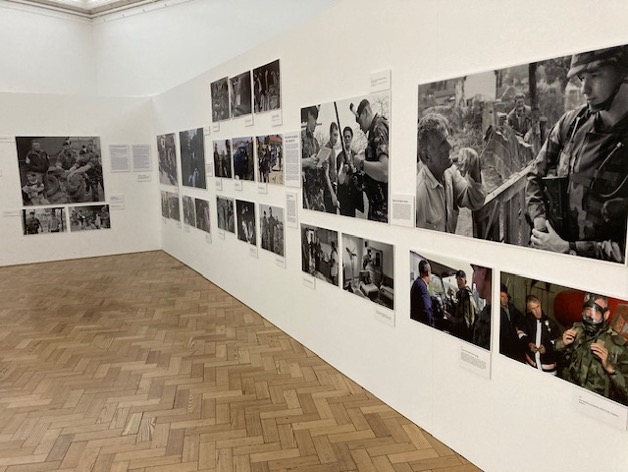
Following the opening speech by Lord Robertson, Mr Martin Vickers, MP and Chair of the Kosova and Albania APPG gave his presentation, extract of which is below:
‘We all know KFOR entered Kosovo in 1999 after years of ethnic cleansing and widespread human rights abuse and the displacement of hundreds and thousands of people. It was an enormous task, but as the exhibition shows soldiers from multiple nations worked alongside local communities to create the conditions in which peace could begin to take hold. The achievement should never be taken for granted. 27 years on, there is a risk that these events begin to feel distant and for young people born today, the Kosovo conflict can appear as a mere historical episode and that distance matters. Distance can lead to detachment, detachment can allow misunderstanding, distortion and denial to take root. We have seen elsewhere in Europe how quickly history can be contested or rewritten. That is why exhibitions such as this are so important. They bridge generations and allow those who did not live through the events to understand, not only what happened but how and why it happened. They explain how intolerance if left unchallenged can escalate into violence and how neighbours who once lived side by side can come to see one another as enemies. ‘
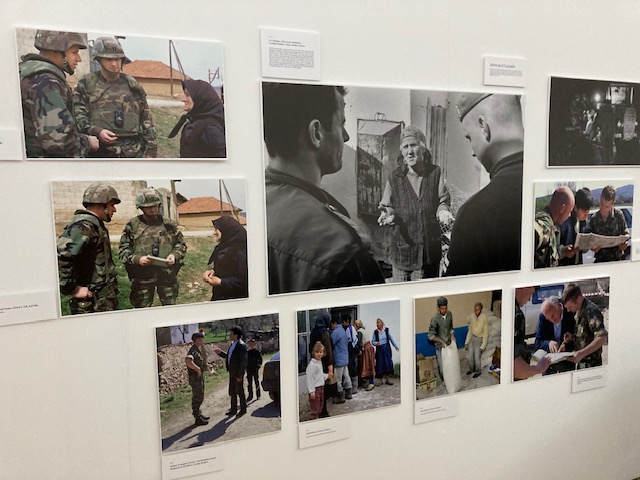
This section of the exhibition (at left) included the stories of farmers planting crops, a tractor breakdown at night and delivery of food supplies to remote villages by KFOR. Other sections of the exhibition included going to work, going to school, medical clinics and other aspects of everyday life in the period immediately post the 1999 war in Kosova.
Martin Vickers was followed by Lord Clive Soley, who gave the following address;
‘I’m delighted to be part of this exhibition. I have seen the photographs. They are very powerful and reminded me when I was Chairman of the Parliamentary Labour Party and we decided to intervene to stop the ethnic cleansing. It was one of the most difficult decisions you can make in politics. It’s always undertainas to whether you get it right or not but we did get it right and thanks to the courage and professionalism of our troops and the troops of NATO and other countries, both Serbia and Kosova and the whole region is now beginning to enjoy the prospects of peace without the ethnic hatred that was taking place at the time. So thank you for organising this, Sita and the Heartstone team, and particularly Nick Sidle, I have been delighted to be with you today and I hope the exhibition goes from success to success. ‘
Lord Clive Soley , Parliamentary Labour Party Chair in 1999
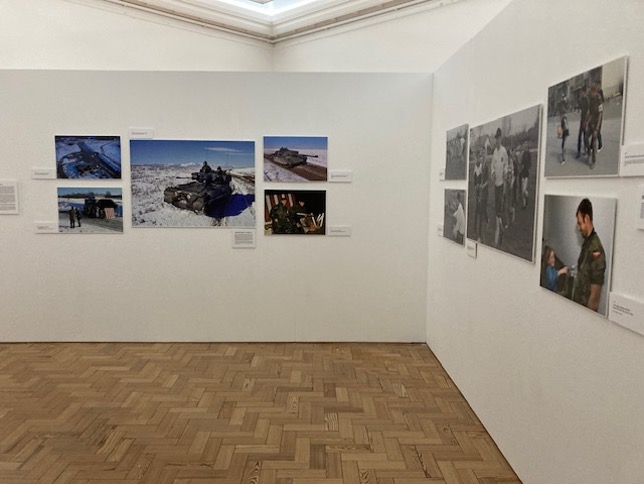
The Gate 3 story , football and toy gun story were presented in this section of the exhibition.
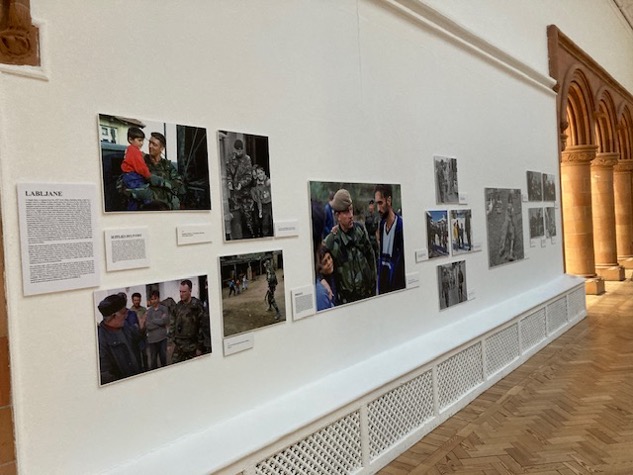
The Labljane, supplies delivery, guard on Serb flat, visit to the Roma village and involvement of Scandinavian regiments photostories and the now famous ‘Roma girl with puppy’ photograph, which has won worldwide acclaim, were presented on another wall .
The change in the reactions of children to soldiers, from fear and suspicion at the start of the story in early 2000 to welcome by the time of these photos, was clearly visible showing the impact of the KFOR soldiers in a relatively short space of time. Another wall presented the ‘Blown Fuse’, ‘Visit to Elderly’ and ‘Going to Work’ stories.
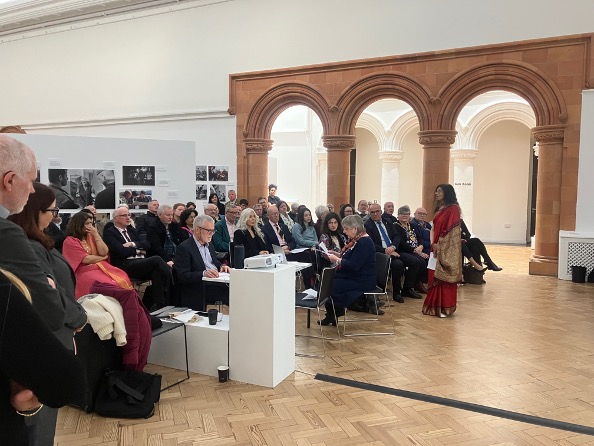
The launch event was well attended by specially invited guests, including the soldiers from the images. Also joining online were the first civilians from the images who have been located and other special guests.
Vice Lord Lieutenant Sharman Birtles is pictured addressing audience and online guests. She said:
“Events like this are invaluable in teaching us to understand and show tolerance for each other. We must recognise a common humanity and not turn a blind eye to any incidents of prejudice, intolerance and hate. It is therefore vital that the human stories are recorded and maintained from those dark times in Kosovo’s history.
This exhibition demonstrates how nine nations came together to help establish peace and stability following a conflict caused by inter-ethnic hatred. It also shows that soldiers are not simply warriors but they have a fundamental role as peacekeepers, by interacting with civilians from all communities, providing safety, security and stability on which peace can be built and maintained. The photographs clearly establishes the story of human resilience and hope. It is not just a story from history – it holds many lessons for us, particularly at this point in time. The power of the visual image to shape perceptions is hugely important, the value of a visual story told with integrity and honesty could not be higher.
The vast majority of people in Greater Manchester welcome and embrace many different cultures, traditions and faiths. There is a solid belief in building bridges rather than walls and I can’t help but think that if we all took every opportunity to share dialogue and awareness we would be able to live in a more peaceful and tolerant society. It is therefore vital that despite the challenges in the world around us, these sorts of events continue to flourish and reach out to all.
During the past 5 and a half years as Vice Lord-Lieutenant, it has continued to strike me how we all have far more in common than we have differences. Diverse communities share so much, which helps them to understand each other better and work together for the common good. The global instability does bring challenges and concerns which can often seek to divide us but there is always an opportunity to stand together and celebrate our differences, whilst maintaining our close relationships.”
Sharman Birtles MBE JP DL, Vice Lord Lieuenant of Greater Manchester
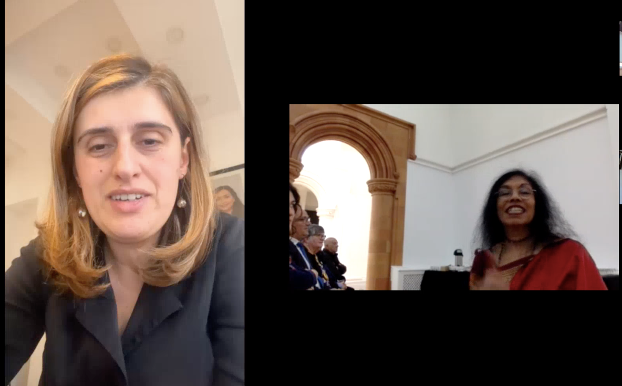
Ms Saranda Bogujevci, now Minister of Culture in Kosova, seen at left, joined online. Not only was her history in Podujeva as a survivor of ethnic cleansing relevant, once evacuated to Manchester, she became an Interactive Arts graduate at the Manchester School of Art and received her degree in The Holden Gallery making this a particularly memorable event.
Below is an extract of Saranda Bogujevci’s speech:
‘For us to be in positions now where we can contribute towards others, it’s incredible. The world has changed a great deal since 20 years ago and I think it’s so important to have this exhibition, to create the opportunity to have these discussions and to tell these stories, to make sure we change the course of not just our lives but that of our children. As I said, I thought things would end with me with having gone through what I went through as a child and we have to make sure that with all the possibilities we have, that we provide also for others that went through what we went through.•
I have had many discussions with people I have met through the years and they always ask what makes a person go to the positive side of trauma and I always say it is the kindness of people around you that makes that difference. The first instance for us on that journey was with the British soldiers of KFOR. So the army is there not just to fight wars, but also there to protect and provide a lot more for those in need and I think we are a great example of that. We are not the only ones. There are so many more stories in Kosova of that kindness. We have to continue telling these stories and continue having this conversation.’
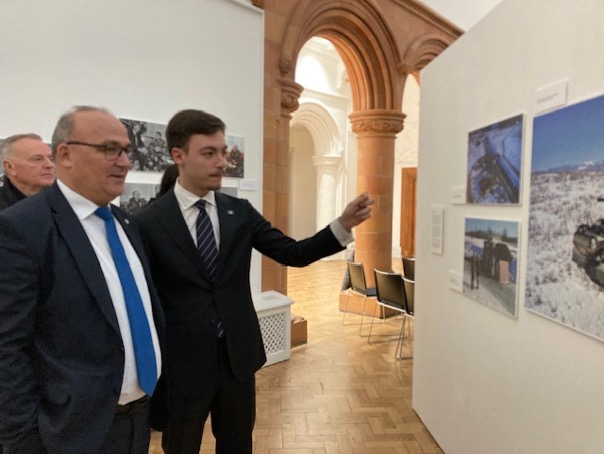
The Mayor of Podujeva attended in person. Diar Bala, Secretary of the Labour Friends of Kosovo & WB6 Parliamentary Group, is pictured here taking him round the Gate 3 story wall in the exhibition, which took place in Podujeva. Discussions are now underway for the exhibition to be presented in Podujeva.
Below is an extract from the Mayor of Podujeva’s speech:
‘The year 1999 was not merely a year of war for us in Podujeva, it was the boundary between darkness and light. Until then, everything that moved on this land seemed to come against us.
For the first time, tanks and military vehicles did not seem hostile, on the contrary, they felt welcome. They were vehicles that brought security, not fear, symbols of protection and not oppression. Under KFOR in Kosovo, a new chapter had begun for our citizens and KFOR’s presence on othe ground brought a sense of stabililty and order at a time when everything was fragile. For the first time soldiers were friends. They were not there to take but to protect. They did not look at us with suspicion but with respect. It was a profound feeling, Patrols through our towns and villages was a sign that a new era had begun.
Today Podujeva is transformed we have new schools, new roads, new infrastructure and a youth who dream freely for the future.
The exhibition ‘KFOR and Kosovo +25’ is a bridge between the past and the present. Peace must be safeguarded every day, international partnership must be cultivated.’•
Mayor of Podujeva Shpejtim Bulliqi
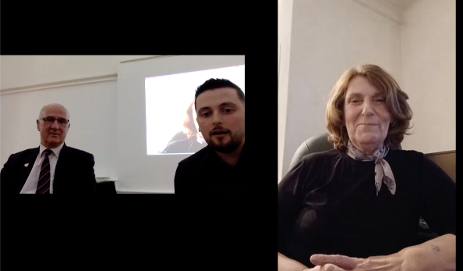
One of the most remarkable highlights of the event was the conversation between George Clegg and Florie Berisha, Headteacher of Burice School in the exhibition, both pictured at left, with Riad Haxha, central, who had successfully located her and made this interaction, 25 years later, possible.
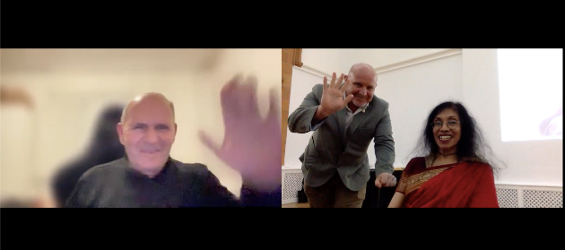
A second highlight of the event was the conversation between Pete Fletcher pictured with Sitakumari (left) and Bedri Osmani, both in one of the central photographs of the exhibition and pictured with Cpl Simon Valentine.
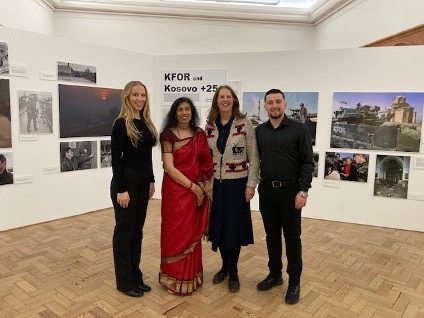
A major partner for the exhibition and launch event was Manchester Aid to Kosovo. One of the trustees and longterm key members, Pam Dawes, was central to the success of this event and is pictured here 2nd from right, together with Riad Haxha, 1st right and Blerta Mehmeti, at left with Sitakumari, Director of Heartstone. Riad and Blerta are the two historians based in Pristina and Brussels, who have started locating the civilians in the images to match the soldiers being traced. Two of the civilians joined this event online and connected with the same soldiers in the images who they had had contact with 25 years previously. This was a historic occasion.
Pam said:
‘The Manchester Met Holden Gallery in the Manchester School of Art was a perfect space and everyone was full of praise for Nick Sidle’s work. Acts of compassion seemed a recurring theme and the images contrast greatly to 1999 images of desperation I had seen and used. The interviews and speeches added real depth and there was a lot of fruitful discussion between invited dignitaries and guests. The exhibition launch brought together 1999/2000 KFOR and Kosovars medically evacuated to Manchester. Before our eyes we saw that the policy of saving suffering civilians had led to rebuilt lives and good futures.’
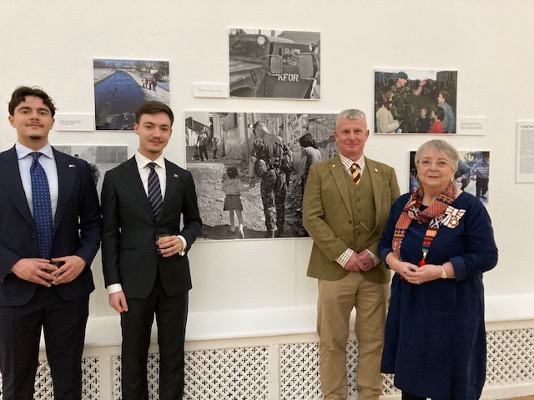
Three KFOR soldiers from the image were present at the event. Pictured here is L Cpl Ian Young second from right together with Vice Lord Lieutenant of Greater Manchester, Sharman Birtles, first right, standing in front of one of the central images of the photodocumentary featuring him 25 years ago with a little girl who had taken his hand in an alleyway as he leads her up to her mother and sister. First left is Orest Jashanica, Member of the All Party Parliamentary Group on Kosovo and Albania, then Diar Bala – Secretary – Labour Friends of Kosovo & WB6 Parliamentary Group, who had both travelled from London to be at the event. Mr Martin Vickers, MP, Chair of the APPG spoke at the event online. Both are now assisting with further stagings and presentations of the exhibition, particularly in the context of students as well as new MP’s.
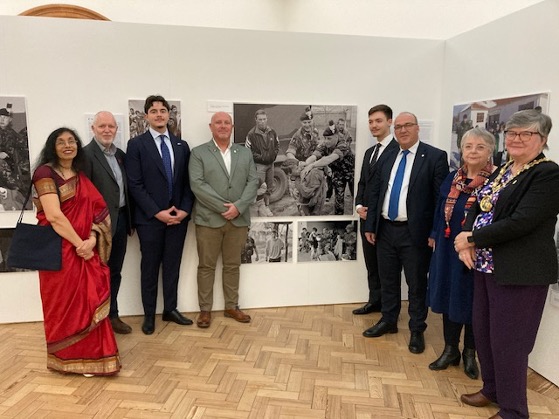
Also present at the event was Pete Fletcher, 4th from left standing in front of the image which features himself and Paul Davies 25 years previously. Pictured in the photograph is the father of the family receiving blankets and toys from the soldiers, who joined this event online from Pristina having been located for this project to add his story, 25 years later into the exhibition.
From left: Sitakumari, Ivan Wadeson, Director – Manchester City of Literature, Orest Jashanica – APPG on Kosovo and Albania, Pete Fletcher, Diar Bala – LFK & WB6 Parliamentary Group, Mayor of Podujeva, Vice Lord Lieutenant Sharman Birtles, Mayor of Rochdale Cllr Janet Emsley.
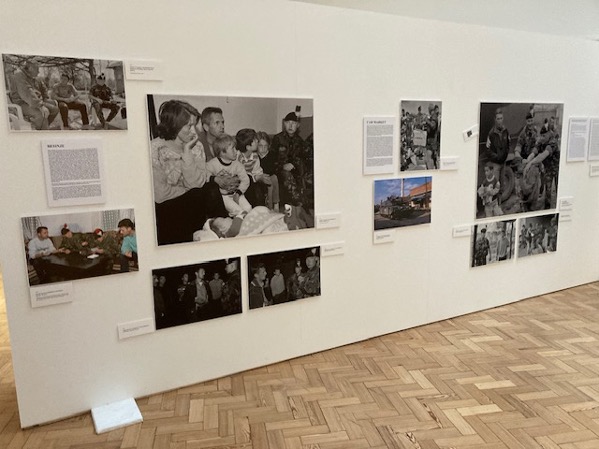
The aid drop involving Pete Fletcher and Paul Davies, in the image series on the right of the wall (above), had started the day before on the patrol with Cpl Simon Valentine, pictured with the same family. The family were traced by Blerta Mehmeti and interviewed for the exhibition. The father, Bedri Osmani, joined the event online to interact with Pete Fletcher.
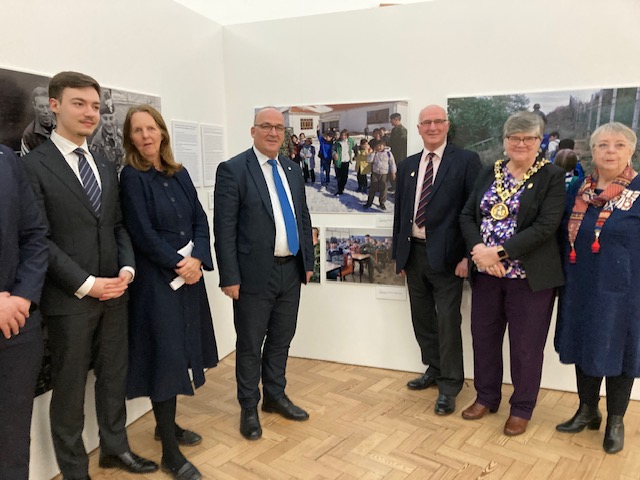
One of the other soldiers in the images, Major George Clegg has also been located and was present at the event. He is pictured here, 3rd from right in front of himself in the photograph 25 years ago, together with Vice Lord Lieutenant Sharman Birtles, Mayor of Rochdale Cllr Janet Emsley, Mayor of Podujeva, Pam Dawes and Diar Bala, LFK & WB6 Parliamentary Group. During the event, George interacted for the first time in 26 years with Headteacher Florie Berisha of Burice School, a school he helped to rebuild, as in the photograph.
Major George Clegg, who was Captain at the time of the photostory, said:
‘Connecting with Florie was very emotional and poignant moment for me. The ‘KFOR and Kosovo +25’ Photodocumentary Exhibition is an excellent historical record of the period 1999-2001 and captures the security and reconstruction challenges faced by KFOR at that time. More importantly it captures the human element and the excellent interaction between KFOR and the people of Kosovo, who had endured much.’
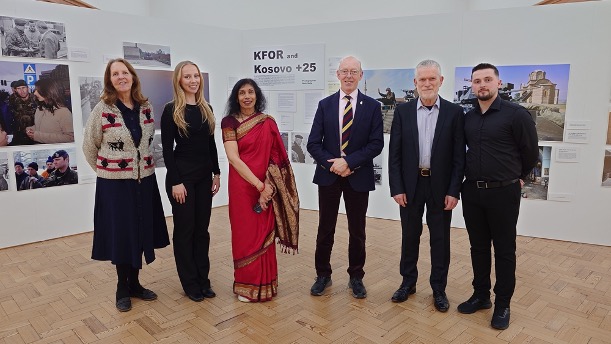
One of the other special guests for the launch event was Col David Vassallo. He is pictured here with the core members of the Heartstone team for the exhibition event. He played a key role in the treating war casualties in Kosova in 1999 and set up the field hospital near Pristina. He spoke of the realities of treating people in this setting which highlighted the exhibition section showing KFOR doctors setting up clinics and treating people of all backgrounds – Albanian, Serb, Roma and others – and the difficulties of doing this in Kosova after the war had ended.
From left: Pam Dawes – Manchester Aid to Kosova, Blerta Mehmeti, Sitakumari, Col Vassallo, Jerry Piper, Riad Haxha
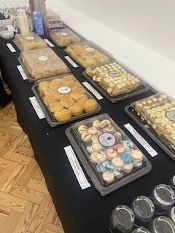
Refreshments for guests were provided by the Amphora Café in Sale, owned and run by Rina Bujupi (below), a child refugee from Kosova at the time of the photostory, now a successful business woman, resident in Greater Manchester. She spoke of her experiences fleeing from the war with her family and one of the opening images in the exhibition, a sunset over Pristina, which brought back vivid memories. She is on the team for this exhibition in Manchester.
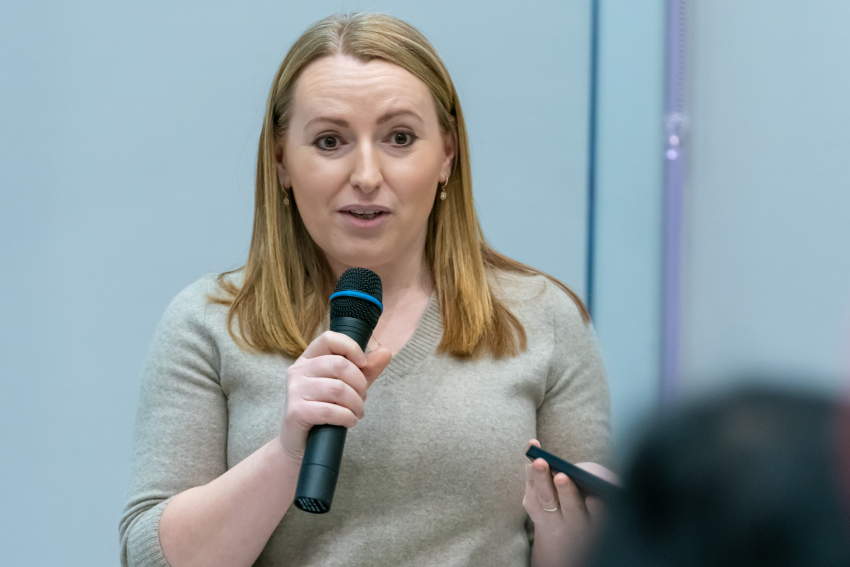
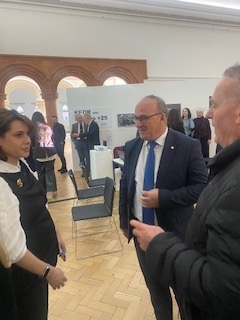
Her father is pictured (right), similarly now a permanent resident in Greater Manchester, with the Mayor of Podujeva (centre) and another Kosovar diaspora resident in the region.
Rina said: ‘It’s always special for me to go to an event where Kosova is celebrated and stories are shared. For me it’s always relevant as it’s so personal. We should always remember the past and talk about it, especially with people who have not heard anything about the region before.’
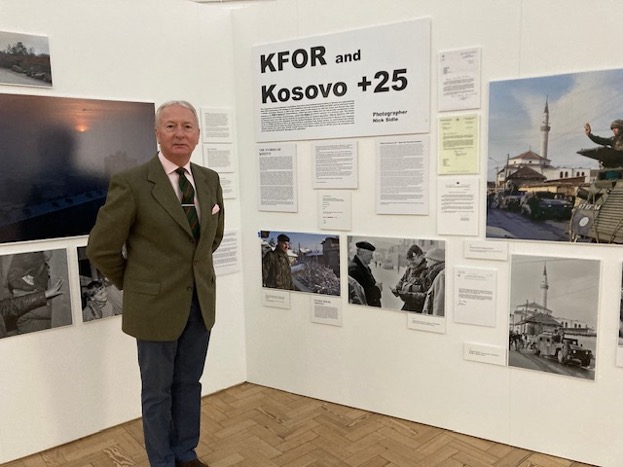
One of the special guests in the exhibition was representing the Royal Green Jackets regiment, Sean McEvoy, pictured here in front of soldiers he knows from the regiment. It is hoped the next addition into the exhibition will be the section on his regiment which is not yet included. The exhibition as in Manchester but including the new section is intended to take shape in Winchester in the autumn.
One of the other main partners for this exhibition staging in Manchester was Faith Network for Manchester Rabbi Warren Elf, the Co-Chair, presented the following speech which summed up the relevance of the exhibition in Manchester and the UK today:
‘It is an honour for the Faith Network for Manchester to be part of the launch event of this important exhibition and to support the work going on to promote the memory of the work that was done and its impact for us today. It has been a privilege to work with Heartstone on many important projects.
The photos in this exhibition highlight the world of Kosovo at the time from a human angle, which is so important. It was a world in which intolerance had been taken to new levels, which is why there was a need for the peacekeeping intervention of KFOR to safeguard lives and homes, and help rebuild ordinary life in what were extraordinary circumstances.
The atrocities that occurred in the former Yugoslavia were the worst in Europe since the Holocaust. More than 25 years later, this story is not over. This story holds many lessons for our time in a world where so many are living with conflict and hostility, and these conflicts and circumstances are impacting on all of us. We must remember that KFOR is still active in Kosovo. Manchester and many towns and cities in the UK comprise people of many different backgrounds, faiths and cultures, many of whom have been refugees over the years, who have fled a wide variety of conflicts and other issues. We understand the commonality of human experience and why intolerance needs to be addressed, particularly in times of difficulty.
The Faith Network for Manchester works to bring people of different faiths and beliefs, varied cultural and ethnic backgrounds, and of different lifestyles together. Through education, bringing people together, sharing our values, ideals and customs, listening to each other’s stories, we aim to create more understanding of each other, greater community cohesion, a society where we can get on with each other in peace and harmony.
There are many who seek to divide us, here in Manchester and across the UK. There is too much conflict and too much misunderstanding. We will continue to do everything we can to alleviate this but are aware that things can go the other, the wrong way – all too easily, if we do not take responsibility and act. We believe that working together we can all provide the right community and society we want to live in. We must!
This exhibition, created 25 years on from the horrors in Kosovo, when hatred and inhumane actions were not challenged, shows the need for peacekeeping forces and the invaluable work they did and are doing.’
Rabbi Warren Elf, Co-Chair – Faith Network for Manchester
The next phase in Manchester:
Plans are underway for a major event on June 12th, the Manchester ‘Festival of Libraries’ Day for which Heartstone has been given the main performance space at Manchester Central Library.
This is also ‘Liberation Day’ in Kosova and we are working in partnership with Kosova National Library to connect with both Manchester and our other partner, Rosa Parks Museum in Alabama, including children and young people from Story Circles in all 3 locations who will be participating in what will be the next ‘Global Story Circle’ event.
All Story Circles across the UK will be invited to be part of this event joining online from wherever they are located to make this a unique celebration centred on a photodocumentary about a common humanity, hope and resilience and the value of people working together co-operatively for a common goal.