

On Feb 10th 2026, for the first Cura Guardian Online event, presenters included Ada Bends joining from the Rocky Mountains Tribal Leaders Council (RMTLC) in Montana USA and Donna Beisel joining from the Rosa Parks Museum in Alabama. Both are contributors to Cura Guardian Feature Stories.
Interviewer: Sitakumari, Director of Heartstone
Sitakumari
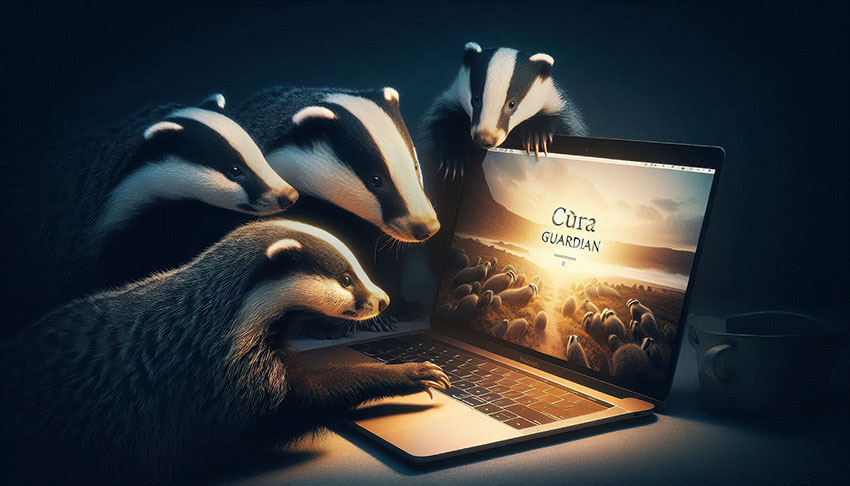
With the central motif for Cùra Guardian being Cùra, the badger, and knowing the badger has an important role in Native American culture, it is wonderful that you have chosen this as your story theme for this event and as your contribution to Cùra Guardian. Please tell us about yourself and who you reach.
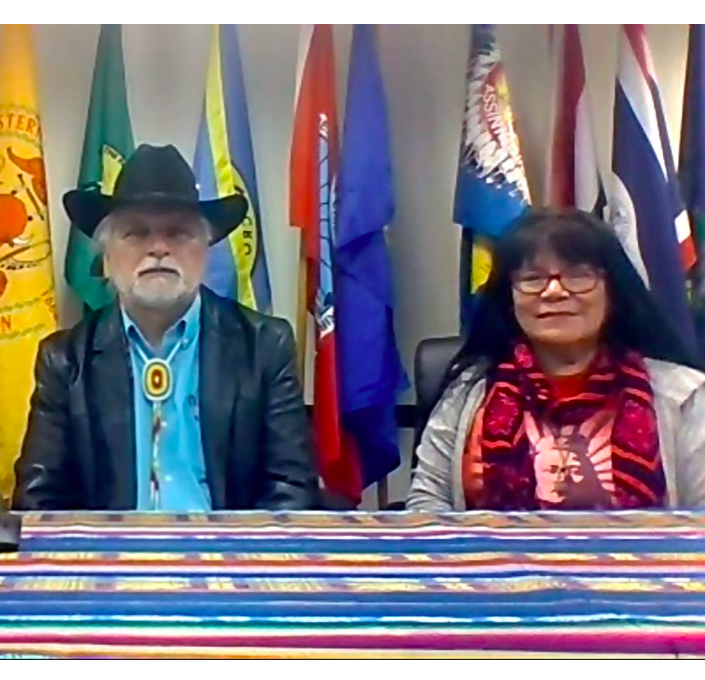
Photograph: Bill Snell, left, Director RMTLC, with Ada Bends, right. Both were part of the event. They are pictured in front of the flags of the Nations who are part of RMTLC.
Ada Bends
Greetings. My name is Ada Bends, my Indian name – my Crow name, is Sacred Tobacco Woman. I’m from the Crow tribe here in Montana, America. I work for the Rocky Mountain Tribal Leaders Council which reaches out to the following tribes:
Apsaalooke (Crow) Tribal Nation-Montana
Northern Cheyenne Tribal Nation-Montana
Fort Belknap reservation lands:
Gros Ventre/Assiniboine Tribal Nations-Montana
Fort Peck reservation lands: Assiniboine/Sioux Tribal Nations-Montana
Rocky Boy reservation lands: Chippewa/Cree Tribal Nations-Montana
Blackfeet reservation lands: Blackfeet Tribal Nation-Montana
Flathead reservation lands: Salish, Kootenai, Pend d’Orielle Tribal lands-Montana
Little Shell reservation land: Chippewa Tribal Nation
Wind River reservation lands: Eastern Shoshone/Northern Arapaho-Wyoming
Fort Hall reservation lands: Shoshone/Bannock Tribal Nations
Piikani Nation of Alberta, Canada
These are the Tribal Nations that our Rocky Mountain Tribal Leaders RMTLC organization work with and where they are located.
The Apsaalooke (Crow) word and spelling for the Badger is awachiia (phonetically spelled: awh’ waah jee aa)just for your information.
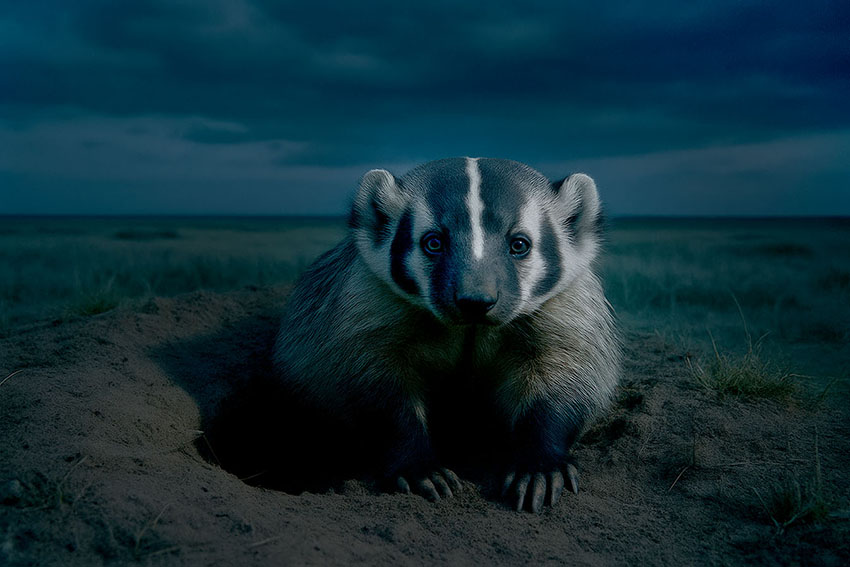
Yes, the presentation I’m going to give is how the badger has an important role in our world. The Apsaalooke (Crow) word and spelling for the Badger is awachiia (phonetically spelled: awh’ waah jee aa). It has great impact for our area through the stories that were given to us and you will see how alive the badger still is in our world.
We have teepees in our Great Plains area in the Rocky Mountain tribal area. We are a large land-based tribal nation here in our area, and we still have our many, many teepees. And one of the things that I want to show you is the importance of the teepees. One of the most important stories told by the tribes here on the Great Plains is that of the teepee or ‘lodge’, which we see as our second mother. The stories include those told through the Apsaalooke, the crow, about the stakes.
Digital illustration right: American Badger
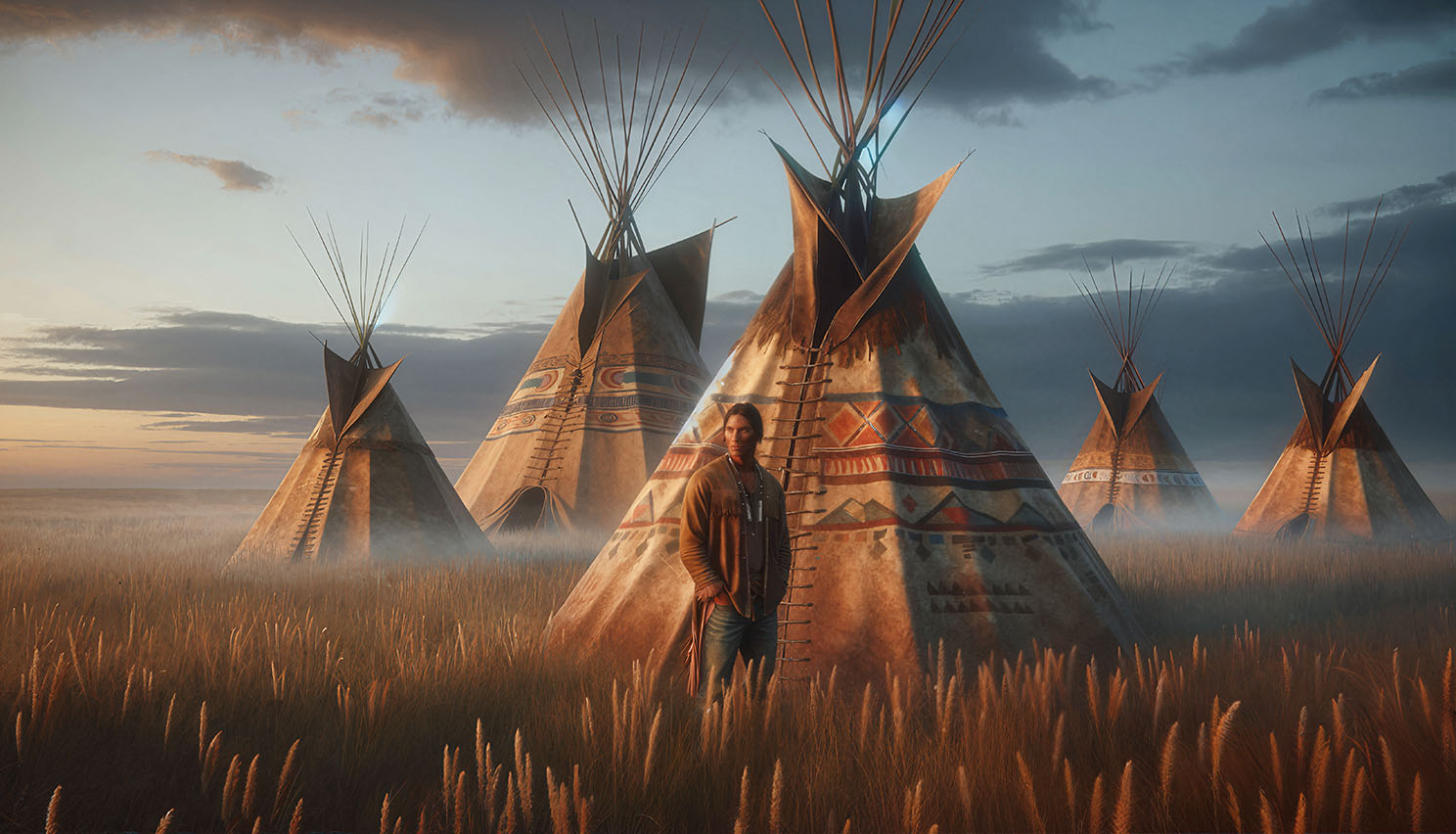 Above: Digital illustration
We were told that Yellow Leggings was given the information of how to put together the lodges, which used buffalo, elk, and deer hides at the time. The stake, that holds down the teepee, represents the badger’s claw. The story of Yellow Leggings when he was given this was that he was told by the badger to go and get the choke cherry tree and stake it deep to hold the teepee down. He said:
‘When there’s any enemy that comes, I dig my claws deep into the earth.
And when I dig my claws deep into the earth, I am steadfast.
And nothing can move me.’
And so that’s how we have used the stakes for our teepees in the past and in the present. For our tribes here in our region, it’s very alive. Every tribe has this representation. The two stripes represent the badger stripes. These are very, very important to us.
Similarly, all the animals that are represented in our teepees are the watchers like the bear and the mountain lion. We have the purity of the white teepee for the Crow. Many tribes use various symbols and various colours on their teepees. And we have our own traditional ceremonies. It’s just a part of our world every day in our present life. Our language, our culture, the stories that we have, that we share with all ages is very important to us.
We have a lot of mountains in our area in the state of Montana in Wyoming with the tribes, particularly Eastern Shoshone and Northern Arapaho of Wyoming both of whom we work with. There are many mountain ranges and plains, and many of the stories are told in every tribal language. For example, you go in to Northern Cheyenne, they have their own language in their ceremonies and the same with the other tribes. It’s all very alive, thriving and each of us carry our stories. Each of us carry alive the songs that we sing and the lullabies.
Sitakumari
You are clearly reaching a lot of people through the tribes in the Rocky Mountains region and I can feel what you are describing, Ada, is very much alive and so interconnected with the natural world, starting with every part of the lodge that you’re living in to every part of your lives. I am also sensing another word that we hear over and over again – balance.
Ada Bends
And that’s a really important part because a lot of our traditional ceremonial people have the badger as their medicine to heal people to pray with. We use tobacco to pray and offer thanks in anything that we do. So all of the animals are important. Our ceremonies are still alive. Everything is alive. So we blend both worlds in the awareness that we have within our boundaries of our lands. We’re able to celebrate and live in those worlds and be connected to nature all the time. In our language, words are powerful. Pray and never stop praying for the healing of all people in our world. So that’s what the badger represents to us, a very strong, strong animal that keeps our lodges in our world strong. The foundation is as strong as the badger’s claws that go into the earth.
And we never forget this because we’re always reminded every day in our lives in our world here in the Rocky Mountain region of all the tribal nations here in America.
Sitakumari
We will be adding the story of the badger, as told by Ada, to form a new Feature Story soon. Watch this space!
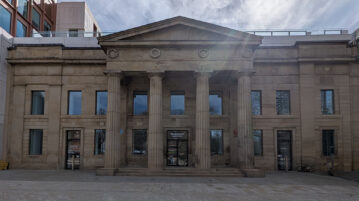
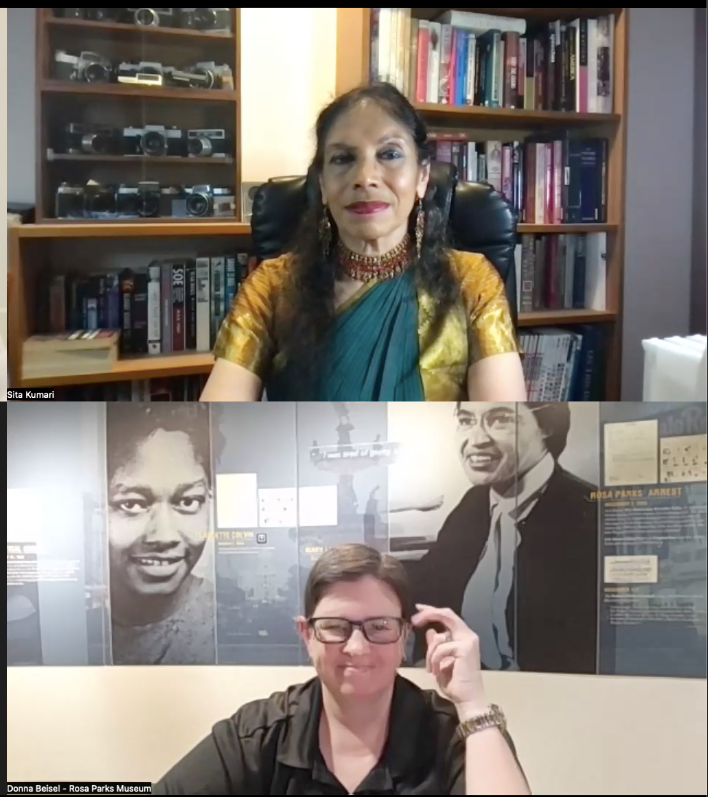 Now to Donna Beisel in Alabama, USA. Donna is pictured at left (lower image, speaking to Sitakumari, top image),the Director of the Rosa Parks Museum, which holds the original documents, films and other archived material connected with the Civil Rights Movement in the Southern USA of the 1950’s and 60’s and Martin Luther King. It was established in Montgomery, Alabama by Troy University working in partnership with community leaders and participants of the famous bus boycott of 1955 which brought Rosa Parks to fame. The Museum keeps the history alive. In this image, she is online with Sitakumari in a storytelling event in 2025 which led to the involvement of Rosa Parks Museum young people at their summer camp in the same year in the first Global Story Circle. The Global Story Circle is made up of groups using several Heartstone stories drawn from Cùra together with our book, The Heartstone Odyssey.
The project Donna led was remarkable. She was able to connect the themes connected with the Civil Rights Movement her young people at the summer camp were discussing, with the themes raised in both ‘The Heartstone Odyssey’ and two ‘Cùra Guardian’ stories – ‘Globalisation’ and ‘The Rainbow Serpent’. This was a ‘first’ and the results were truly powerful setting a precedent for new projects which have followed since.
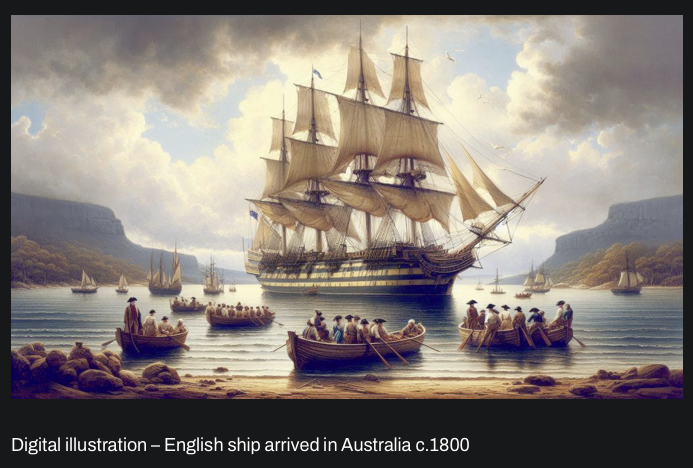
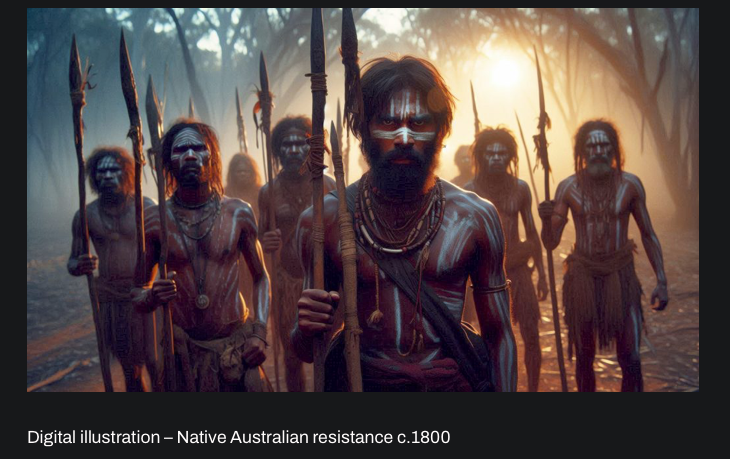
‘Globalisation’ tells the story of Europeans leaving their homeland in the 1800’s setting sail for Australia. This includes convicts sent to Australia as punishment for their crimes. The Feature Story tells what happened next and the repercussions we are feeling, right upto the present time and how this changed the world in Australia for ever.
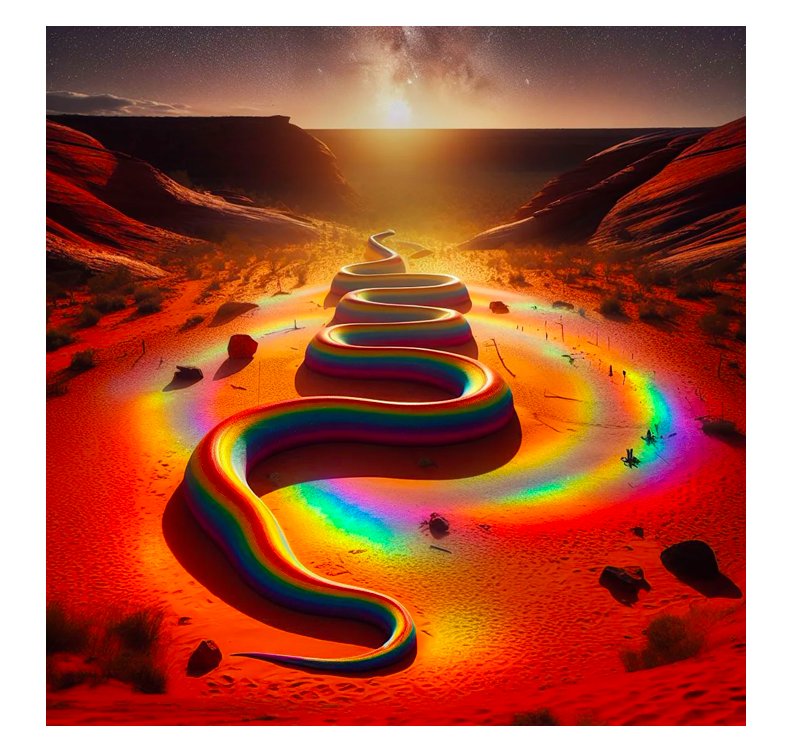
‘Rainbow Serpent’ tells the story of creation as presented in the Aboriginal Dreamtime stories. One image from the Feature Story is on the right. The story ends with the creation of man and woman, who are given the role of protectors and guardians of the earth, not its exploiters, a message as relevant today as it was when the story was first told.
Working over the course of 1 week, the young people at Rosa Parks Museum Summer Camp discussed the issues raised through the Heartstone stories and produced their own exhibition, combining the world of Civil Rights in the southern USA, Martin Luther King and what was faced in the 1960’s, the comparison with 1980’s UK where far-right expressions of hate were an everyday reality, the impact of colonial expansion in the 1800’s and the ultimate impact on the environment for all today. This project was made possible because of the approach through ‘story’, providing the metaphors on which to base discussions incorporating all these themes, from which understanding can follow, the precursor of real change in attitudes and beliefs.
In the next part of this programme, we will be reaching Don Rowlands in Australia, who is donating the Dreamtime stories to Cura Guardian, including the Rainbow Serpent, and Hana Shono in Japan.
To see the full ‘Globalisation 1802’ story, follow the link below to Feature Stories, scroll down to Oceania and click on the story. To access ‘The Rainbow Serpent story, click on link below:
Feature Stories
The Rainbow Serpent
ALL PHOTOGRAPHS AND DIGITAL ILLUSTRATIONS IN THIS POST: ©Nick Sidle